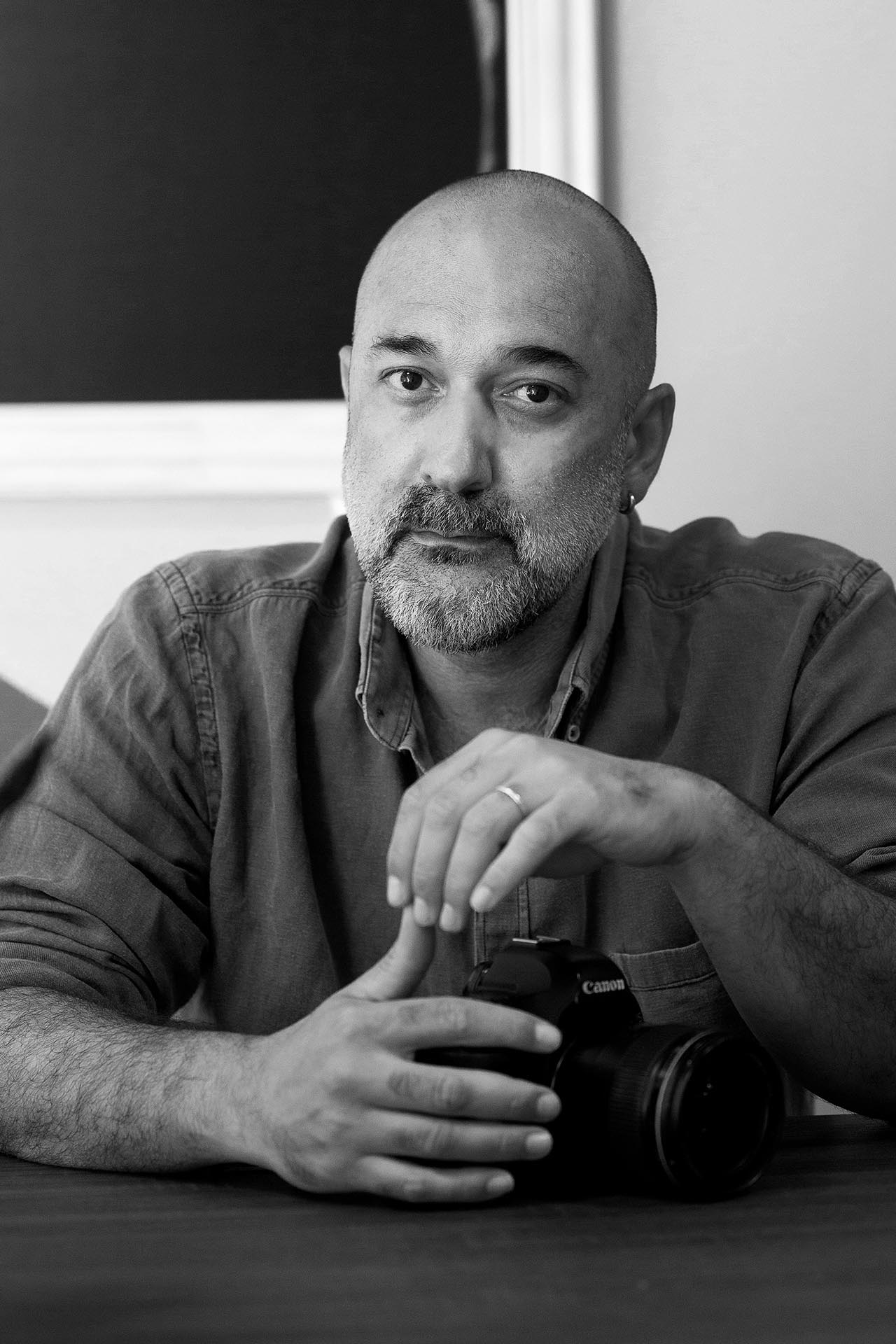
Antonis Pasvantis is based in Kavala, northern Greece. He studied Electrical Engineering & Electronics at Brunel University in West London and Photojournalism at Leica Akademie of Athens. During his studies in photography he focused his work on the life of migrants from west Africa who sold illegal fakes of expensive brands in Athens.
Part of this work has been exhibited in the Young Greek Photographers section of Athens Photo Festival 2006. His work has also been exhibited in the Museum of Photography in Thessaloniki as well as the Odessa/Batumi Photo Days Festival. He followed the refugee crisis from 2015 to 2017 and part of his project about Idomeni has been displayed at the Museum of Photography of Thessaloniki, in the European Parliament and the Adelaide Photo Festival.
Since 2017 he has documented the impact the Greek -Turkish border is having on people. His story Sombre Caste investigates the rise of a new dark class in the aftermath of the 10-year Greek financial crisis and he was among the finalists of Athens Photo World Award contest in 2020, being granted the opportunity to work with a mission of the Greek branch of Medecens sans Frontieres
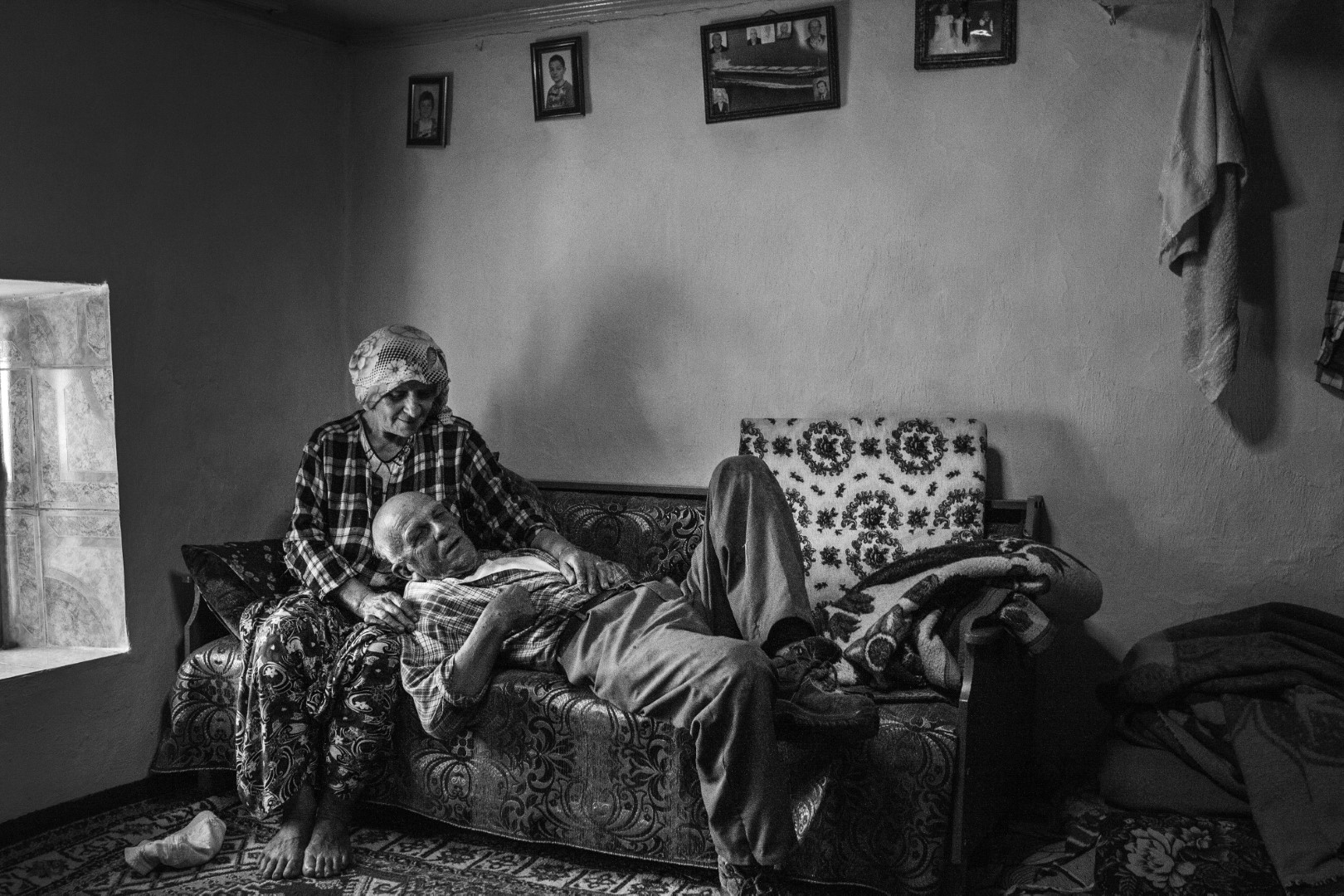
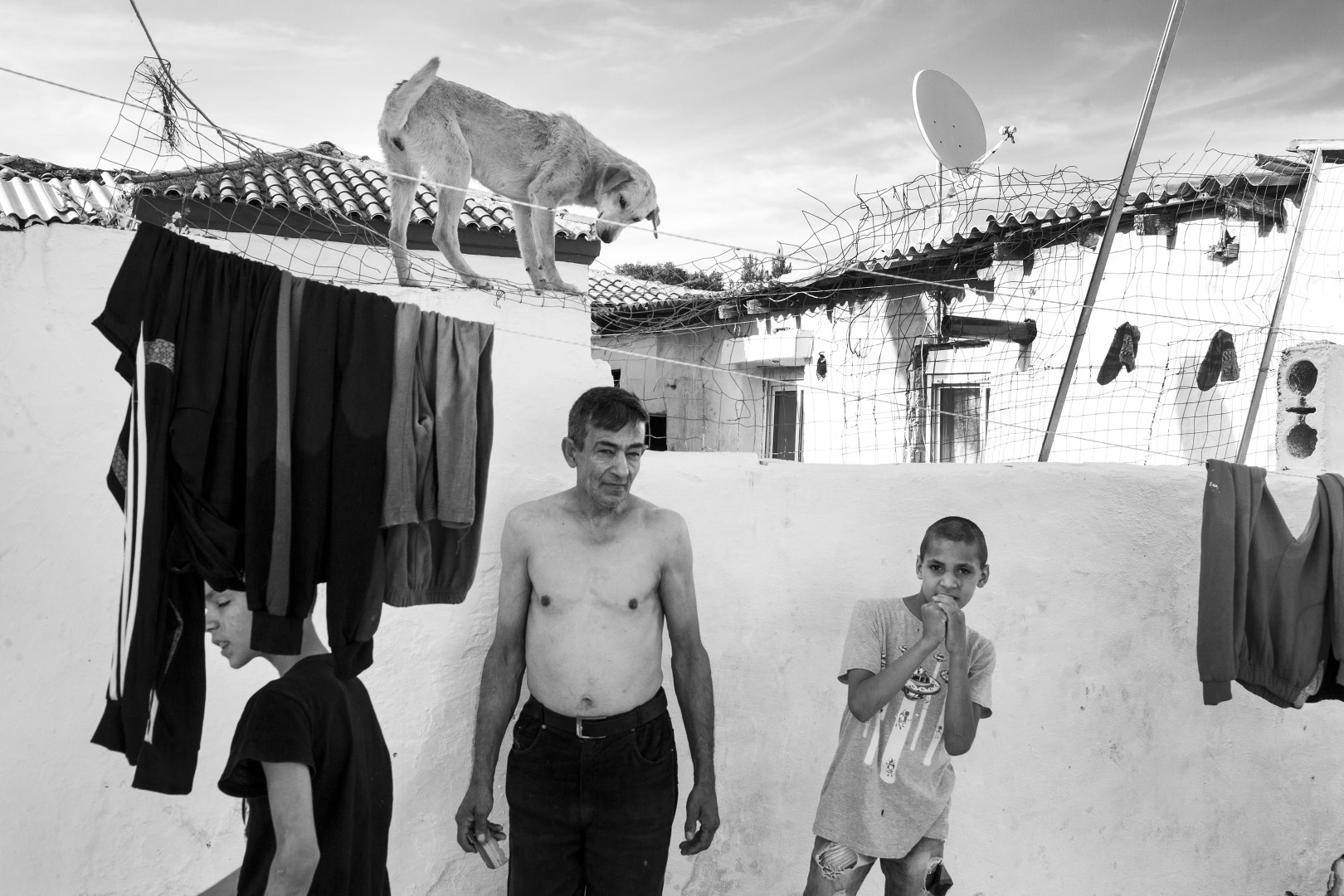
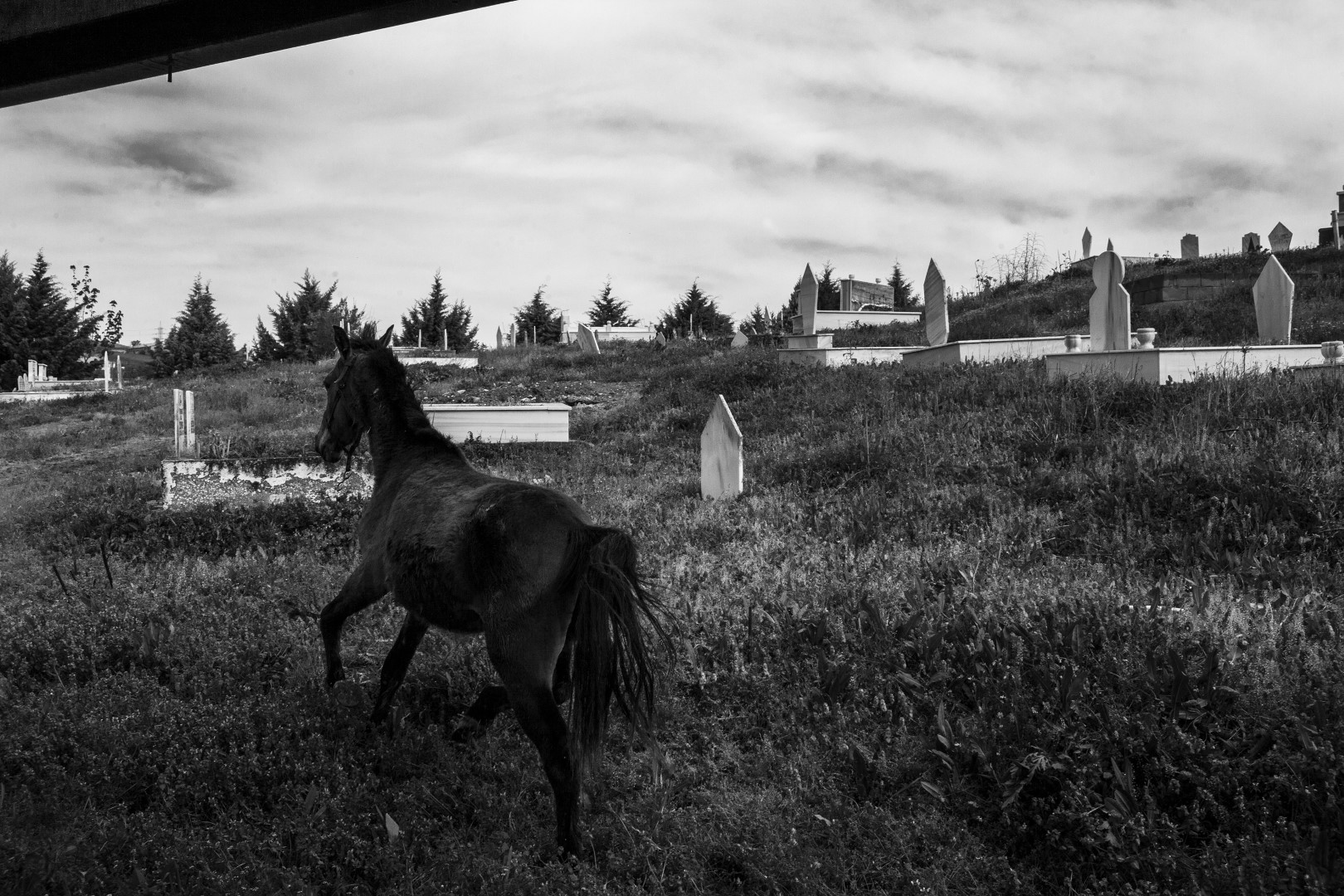
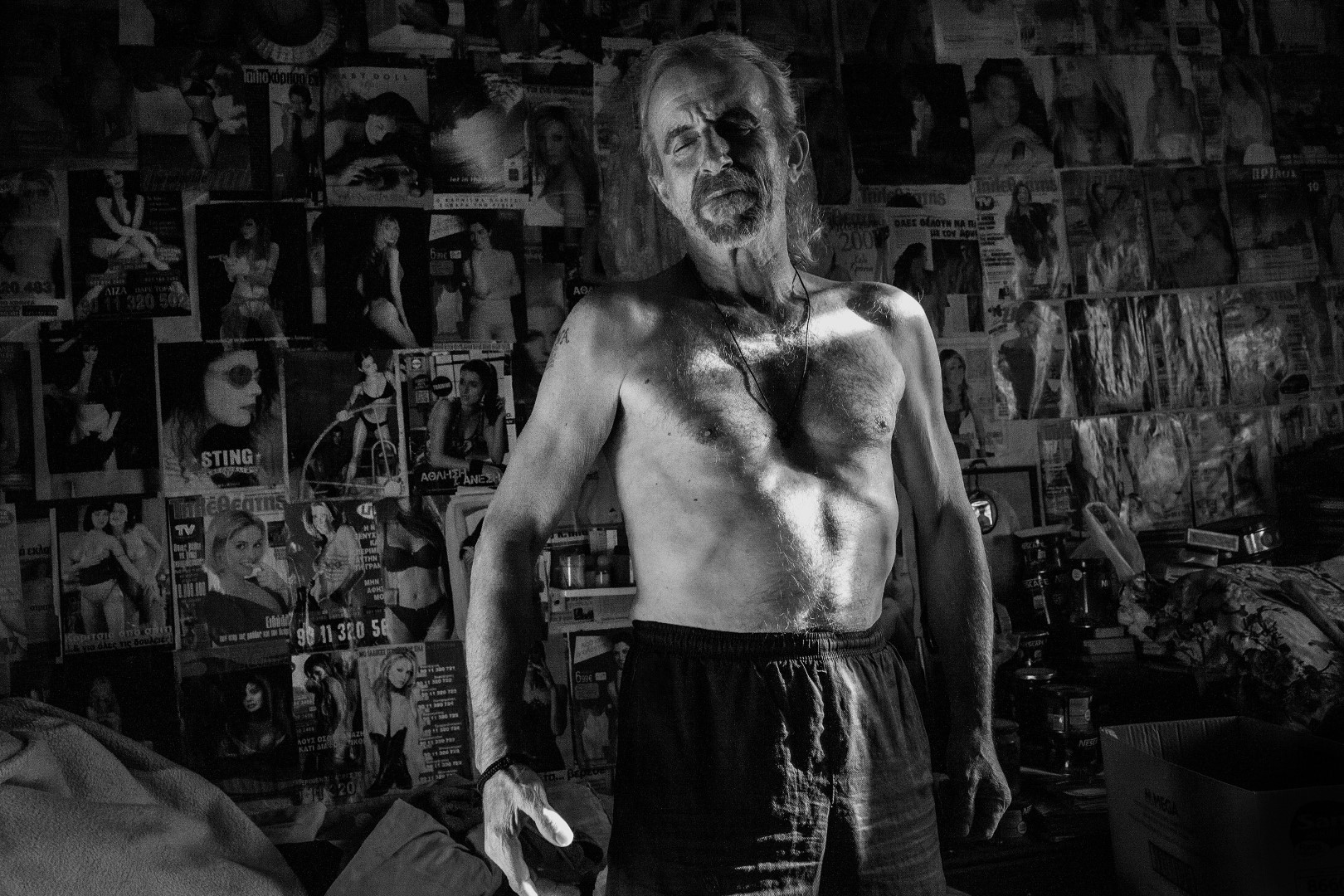
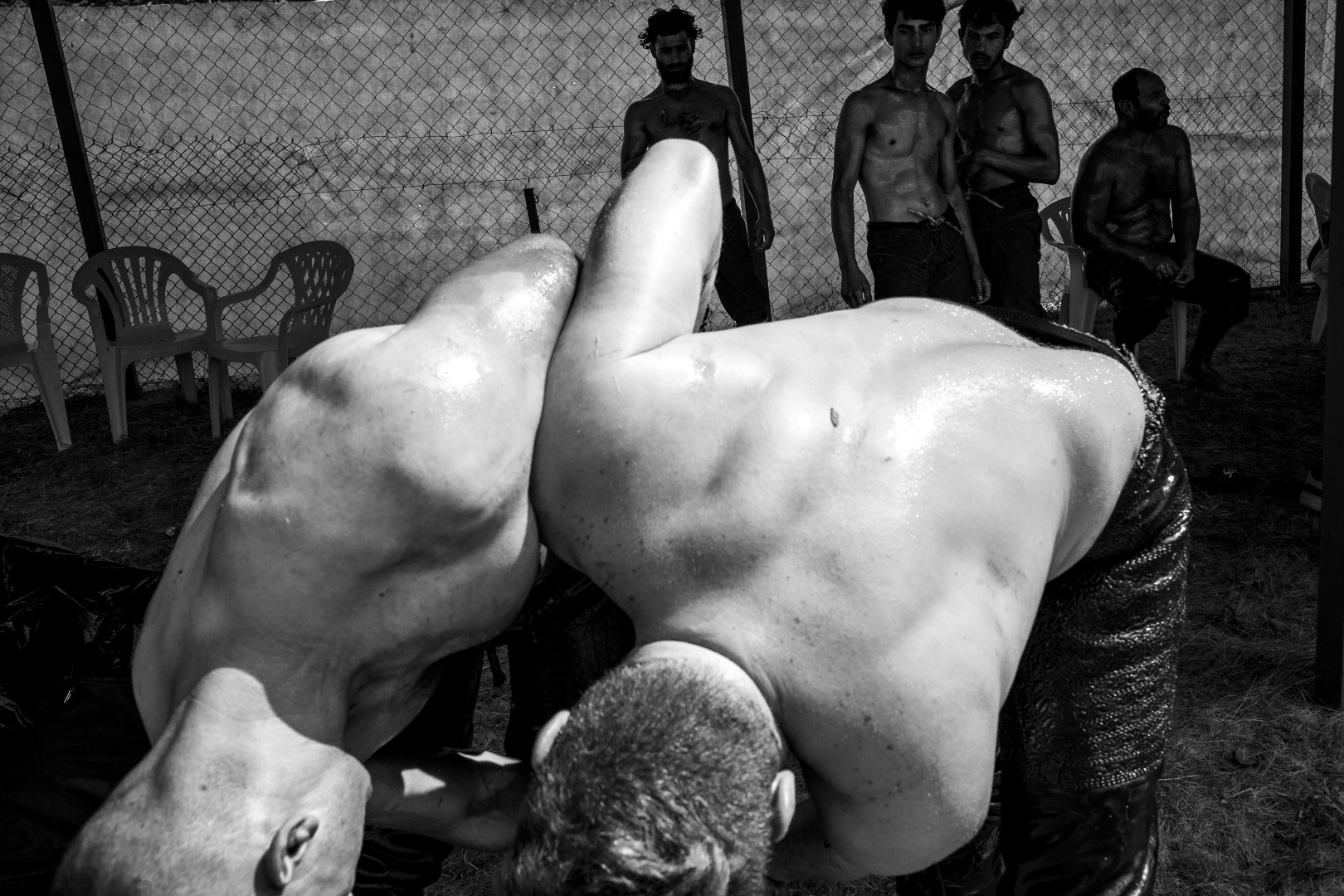
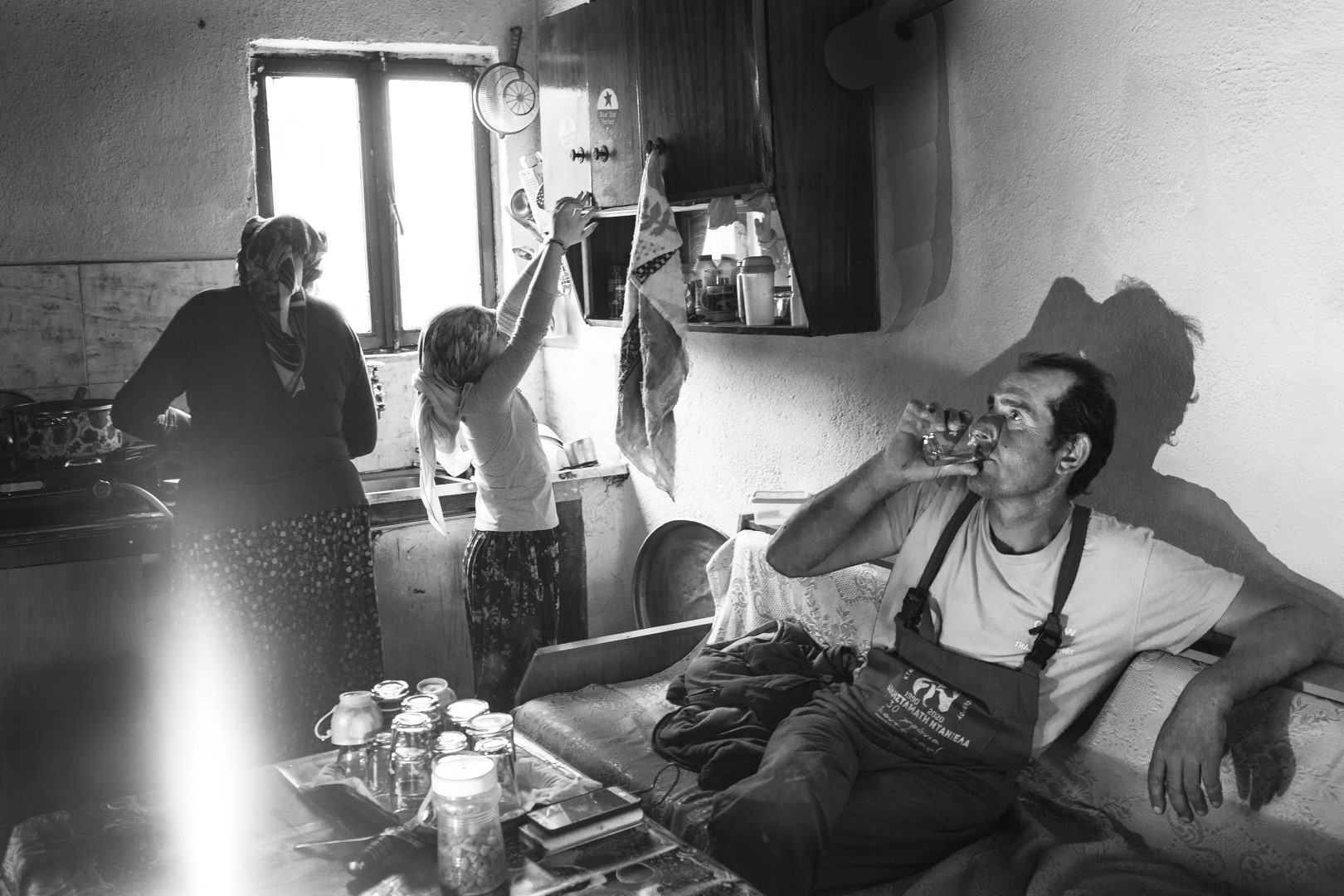
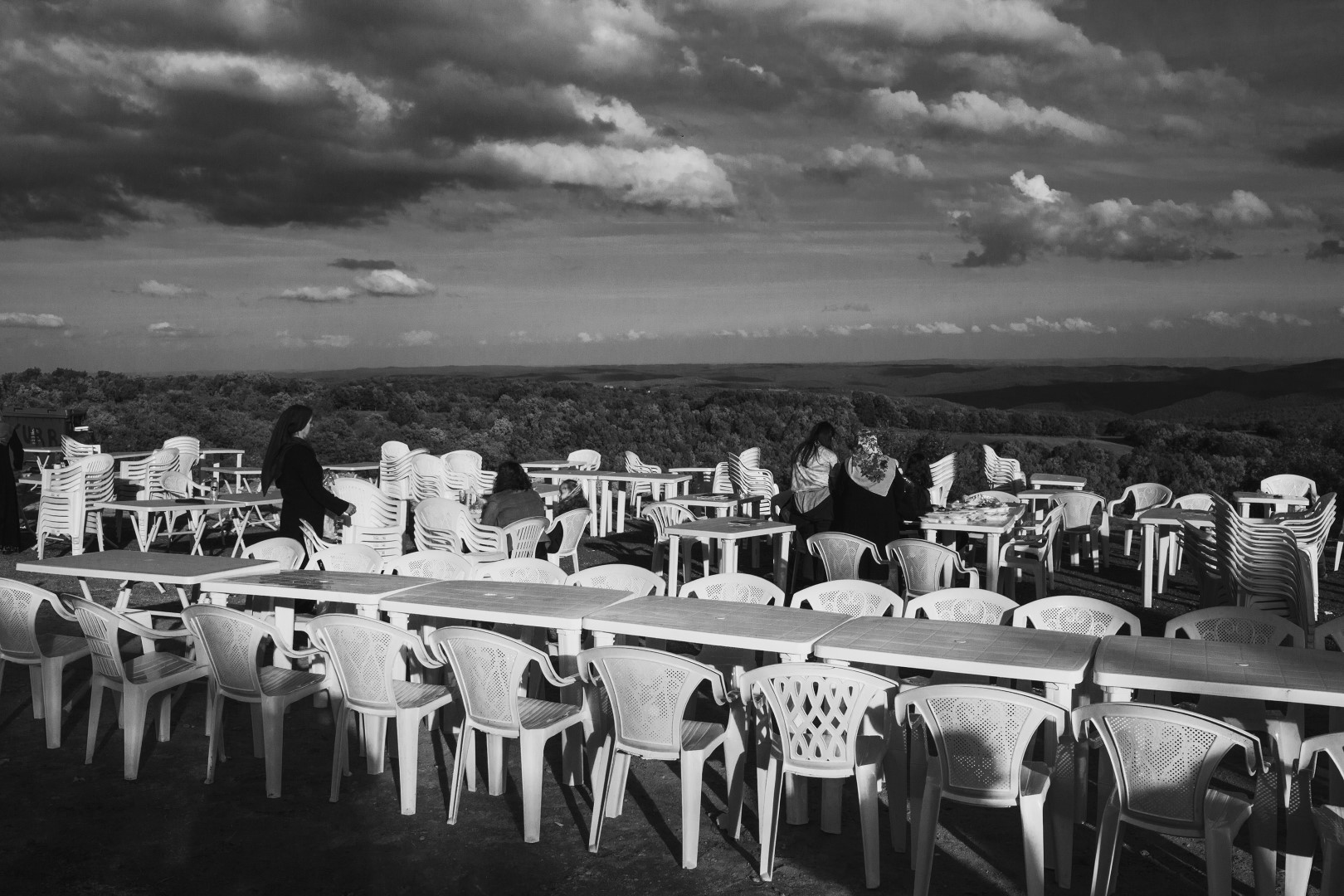
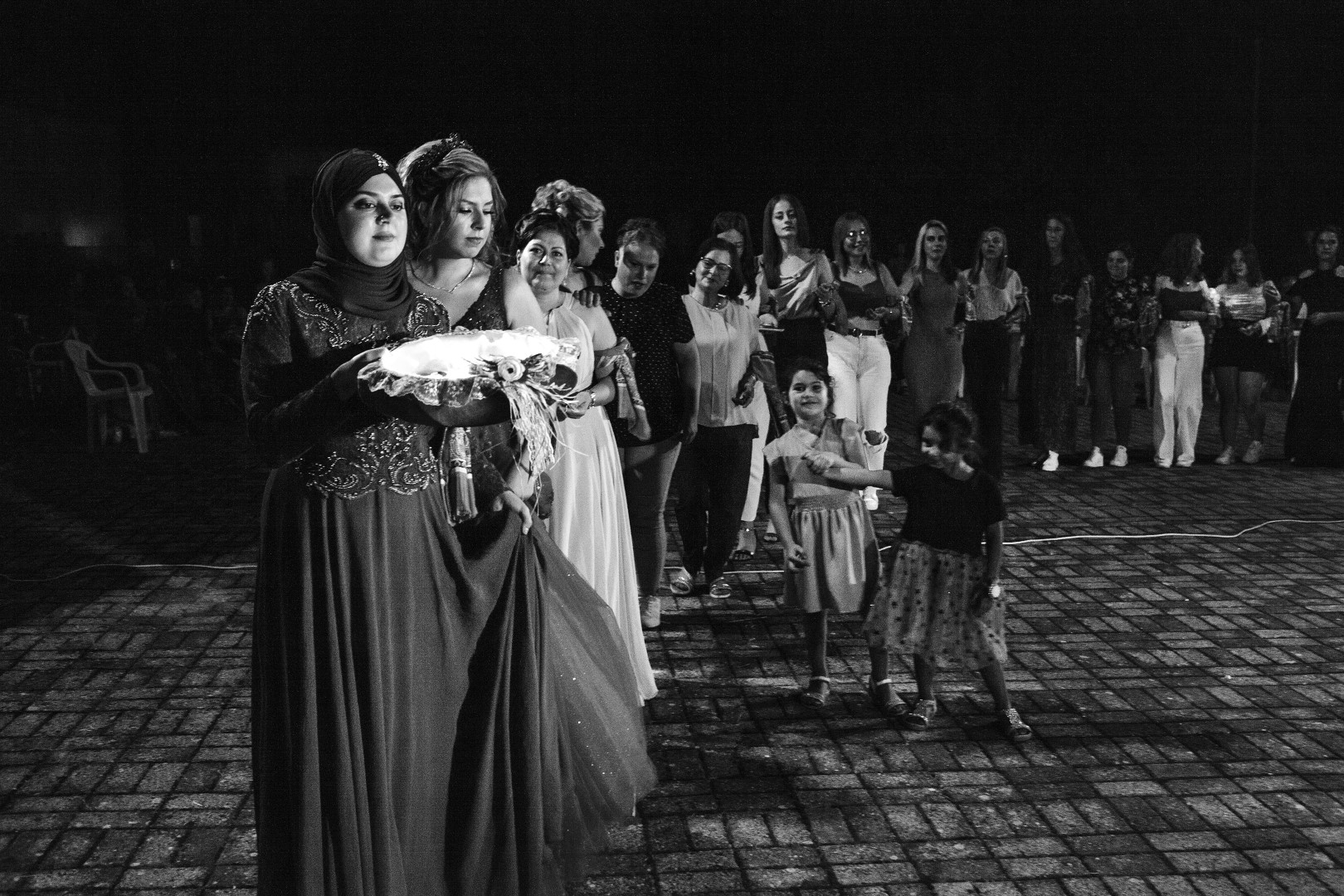
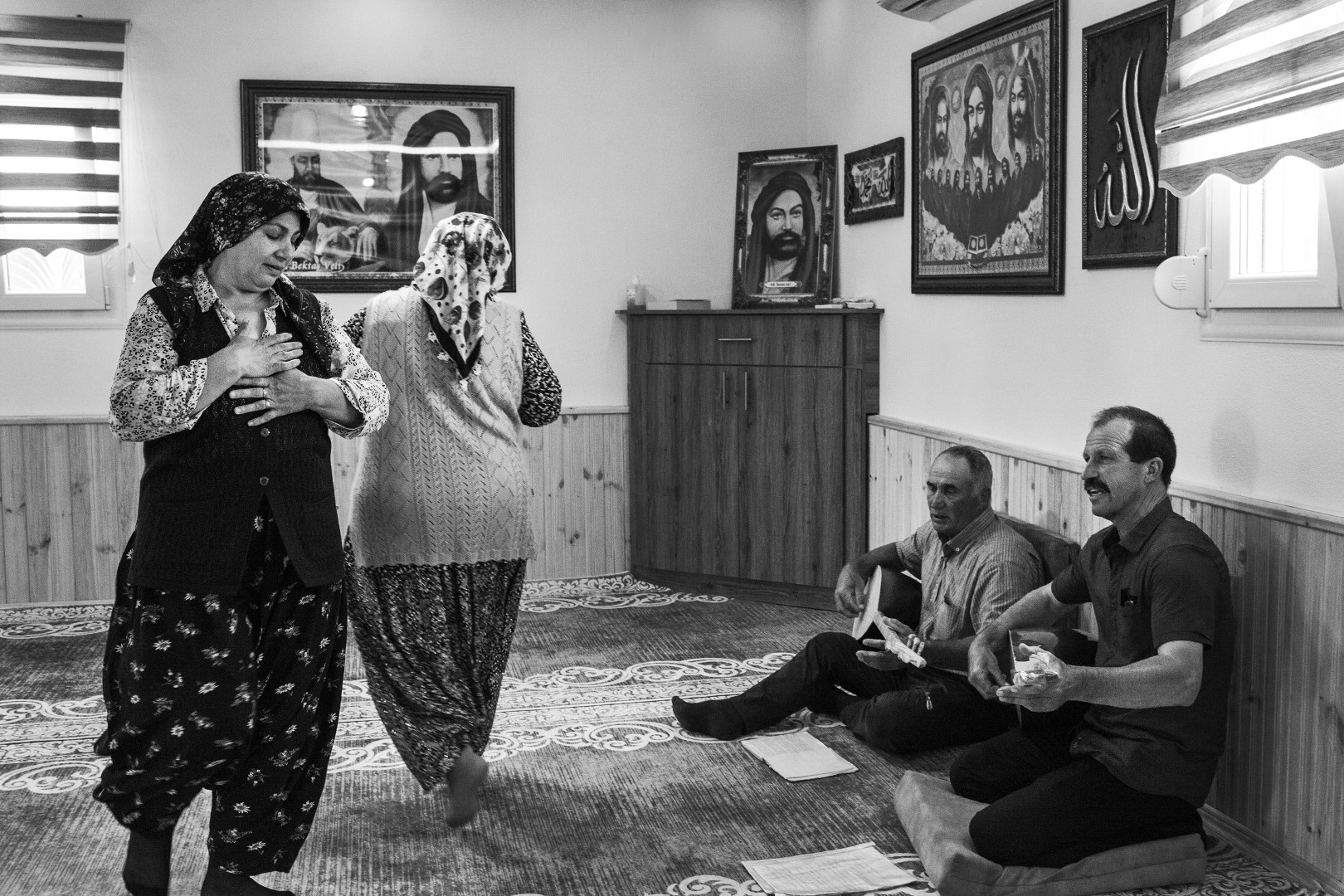
In 1910, nearly 90% of the Muslim population in Thrace identified as Alevis or Behtashis. The Treaty of Lausanne, signed between Greece and Turkey, subsequently labeled these individuals as a Muslim minority.
During the Cold War, a segment of this minority, residing in the Rodopi Mountains near the Bulgarian border, found themselves isolated by internal barriers. To interact with them, special permission was required. Over the years, Sunni Islam gained prominence over other sects.
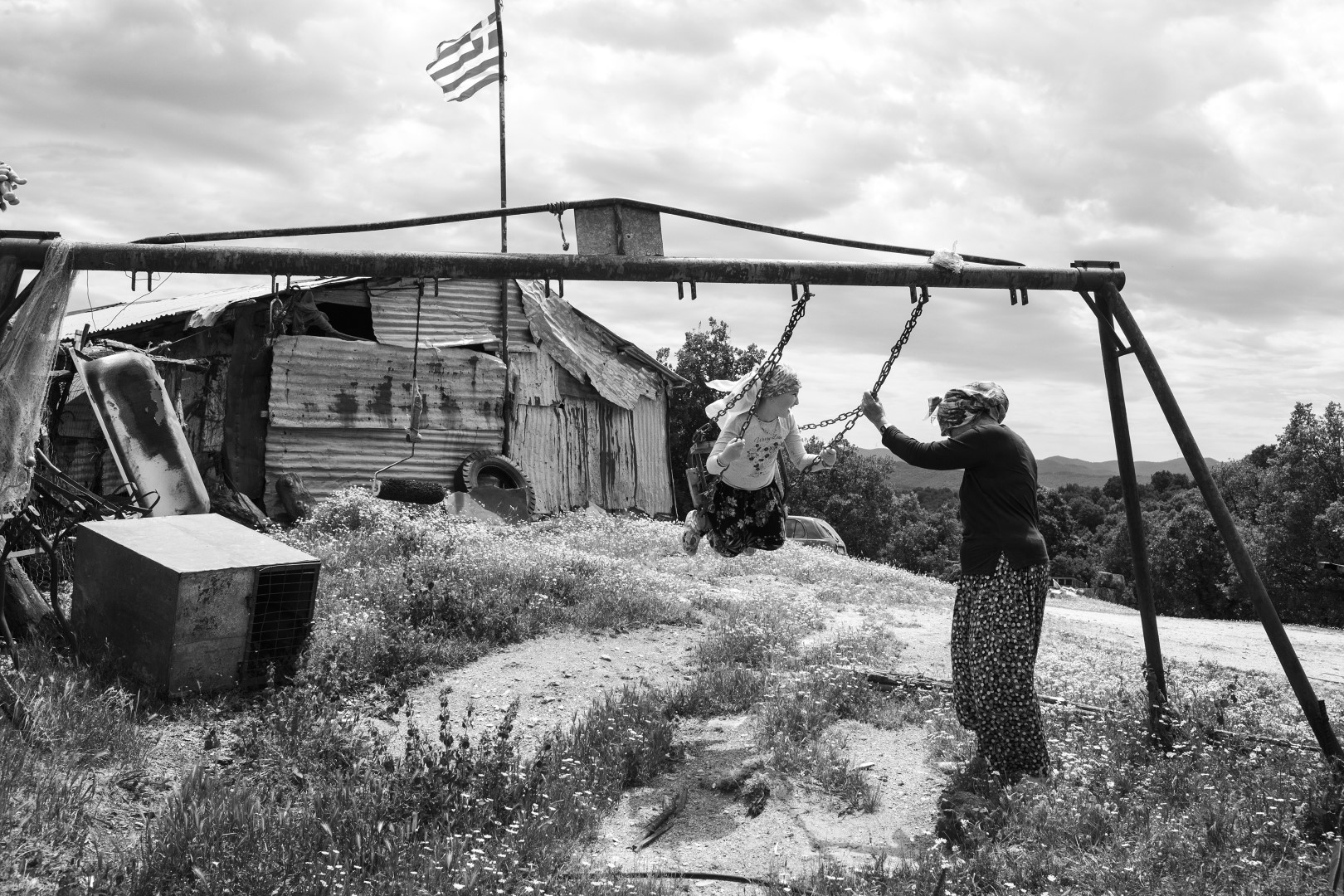
THE LAST COMMUNITY explores the lives and uncertain future of the remaining 4,000 Greek Alevis/Behtashis in the Evros region, probing into their societal concerns through visual examinations and fieldwork interviews.
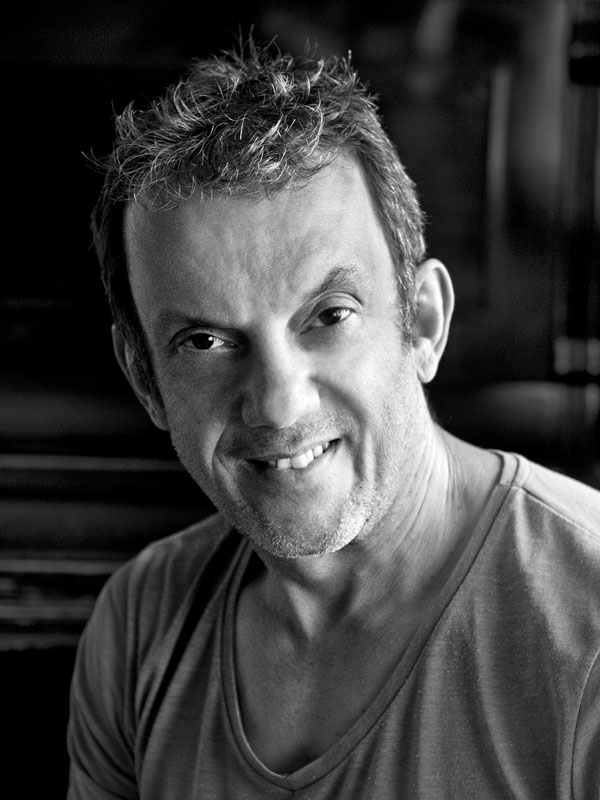
I am a professional photographer based in Athens, Greece.
I studied photography at the Focus schools (photography & video art) 1990-93 and at the Greek Leica Academy 1997-2000.
I worked as a civil servant (1990-2000). In 2000 I quit my job to work as a professional photographer.
I did freelance work for publishing groups and advertising agencies.
Since 2013, I have been working on long-term, people-centered topics with a focus on contemporary social issues.
I like to photograph experientially.
I worked as a photography tutor at Leica Akademie Greece (1997-2021).
I am a member of the Greek Press Photo Union and a member of the Supervisory Board of Foebus (Intellectual Property Rights of Photographers).
My photographs are included in the permanent collection of the Thessaloniki Museum of Photography (MoMus).
In 2022 I received the 1st Award in the APW (Athens Photo World) contest.
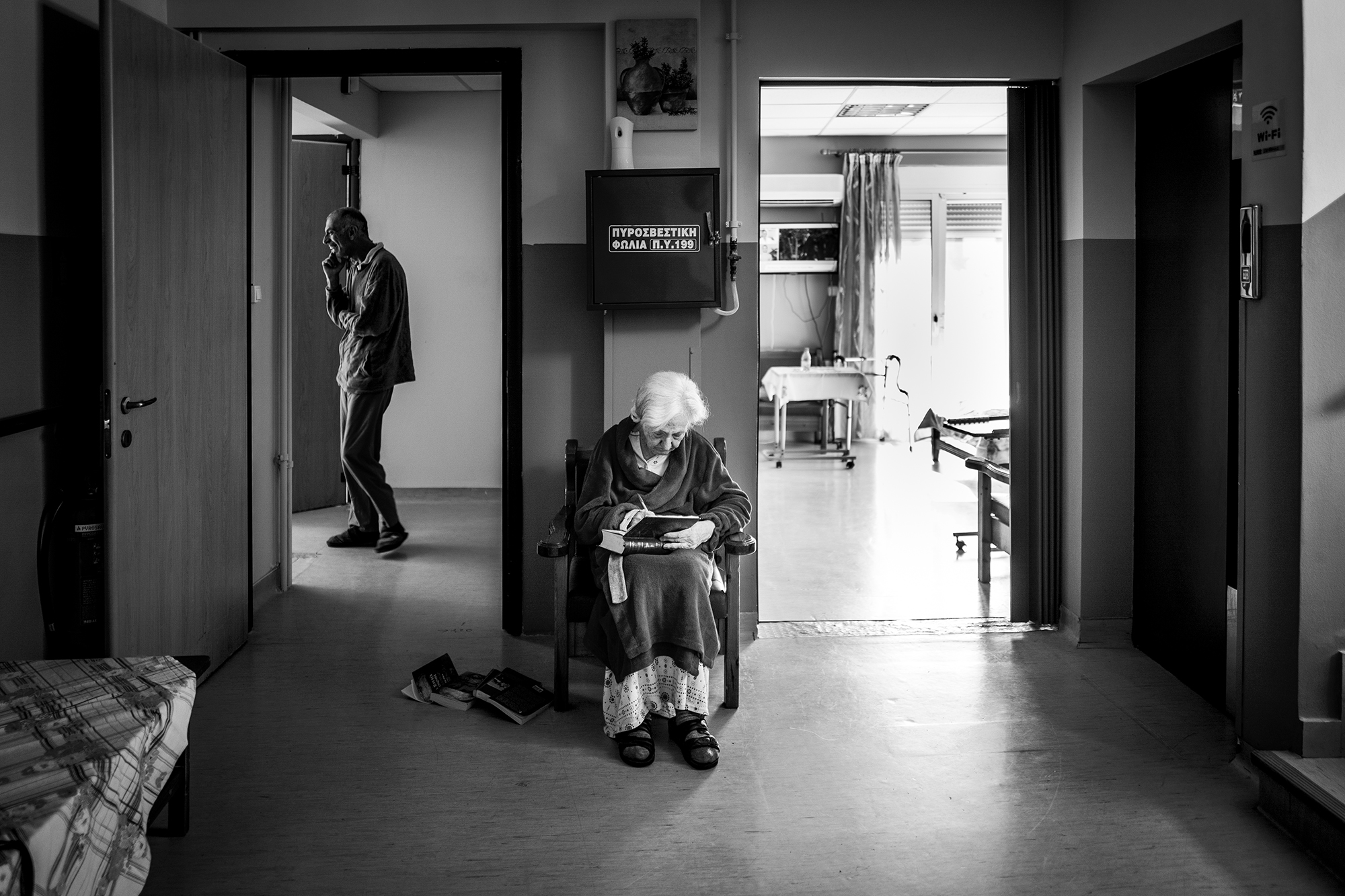
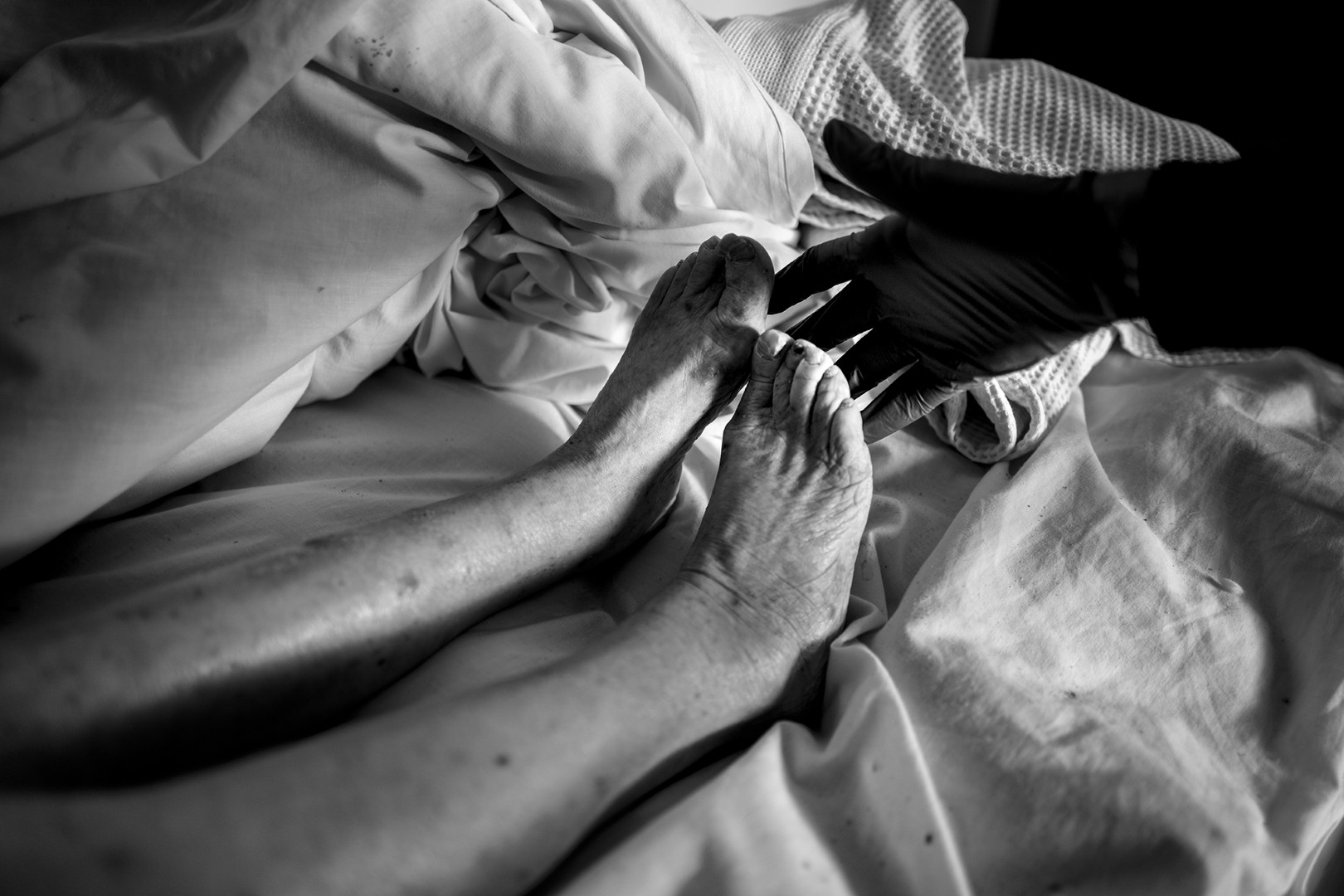
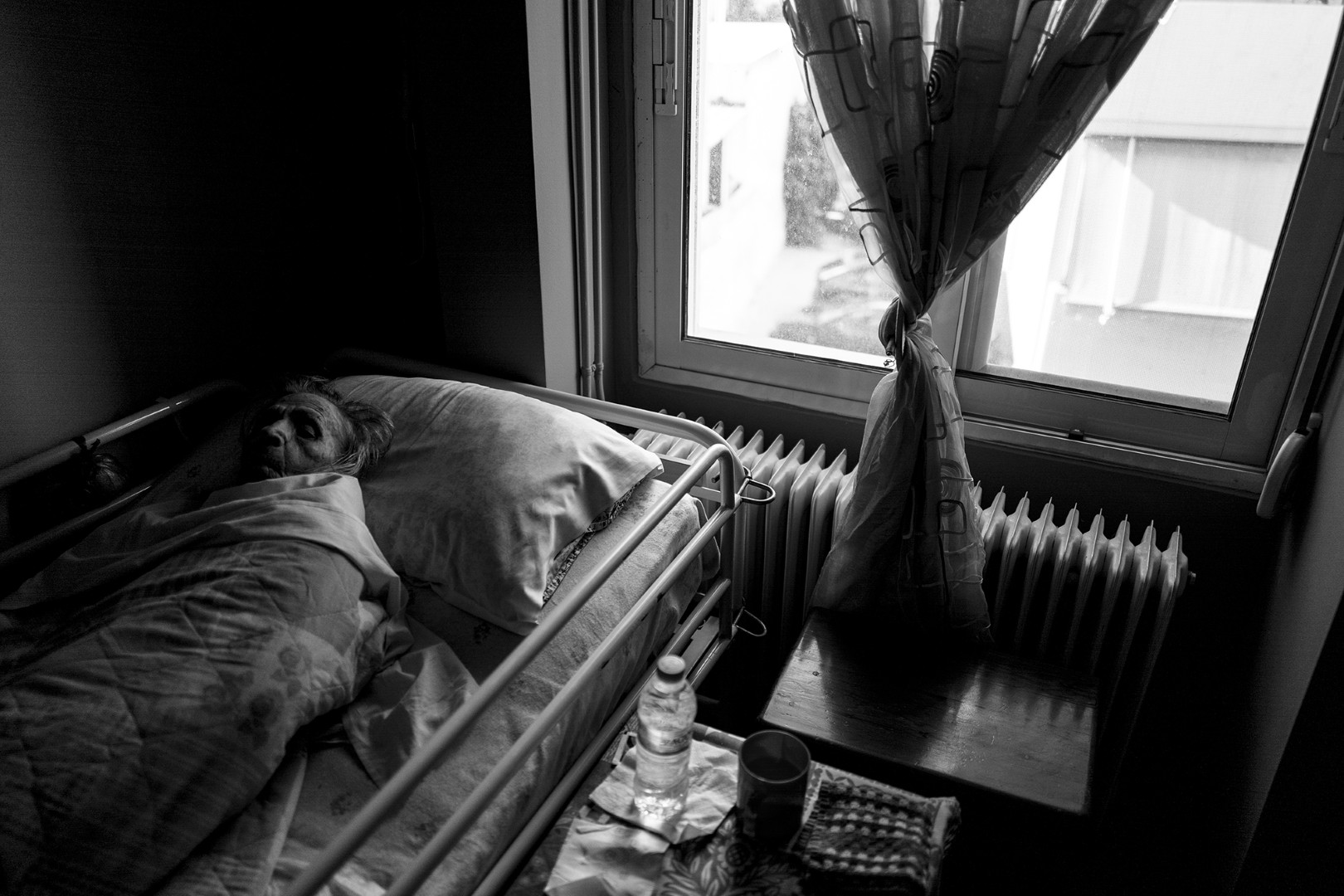
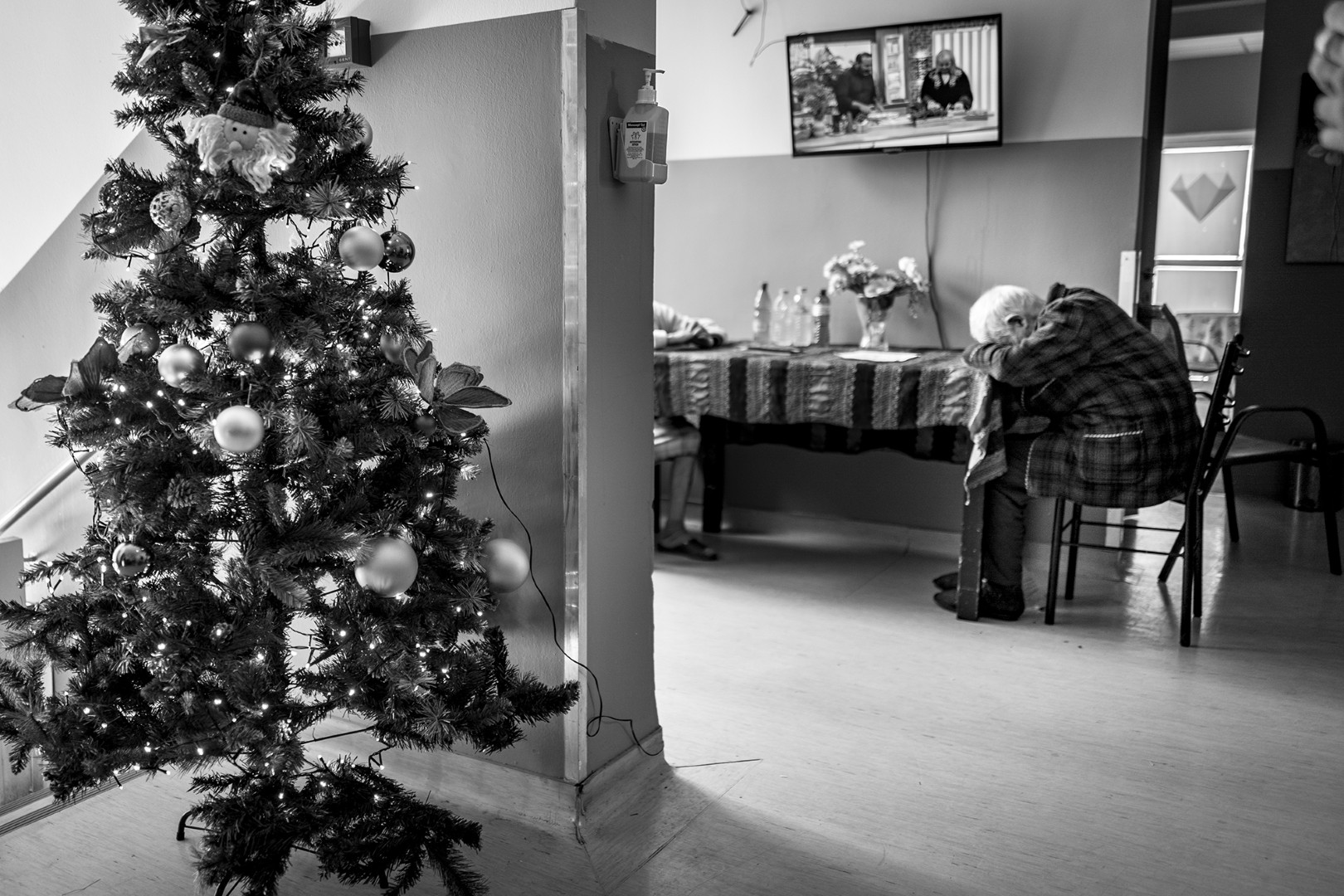
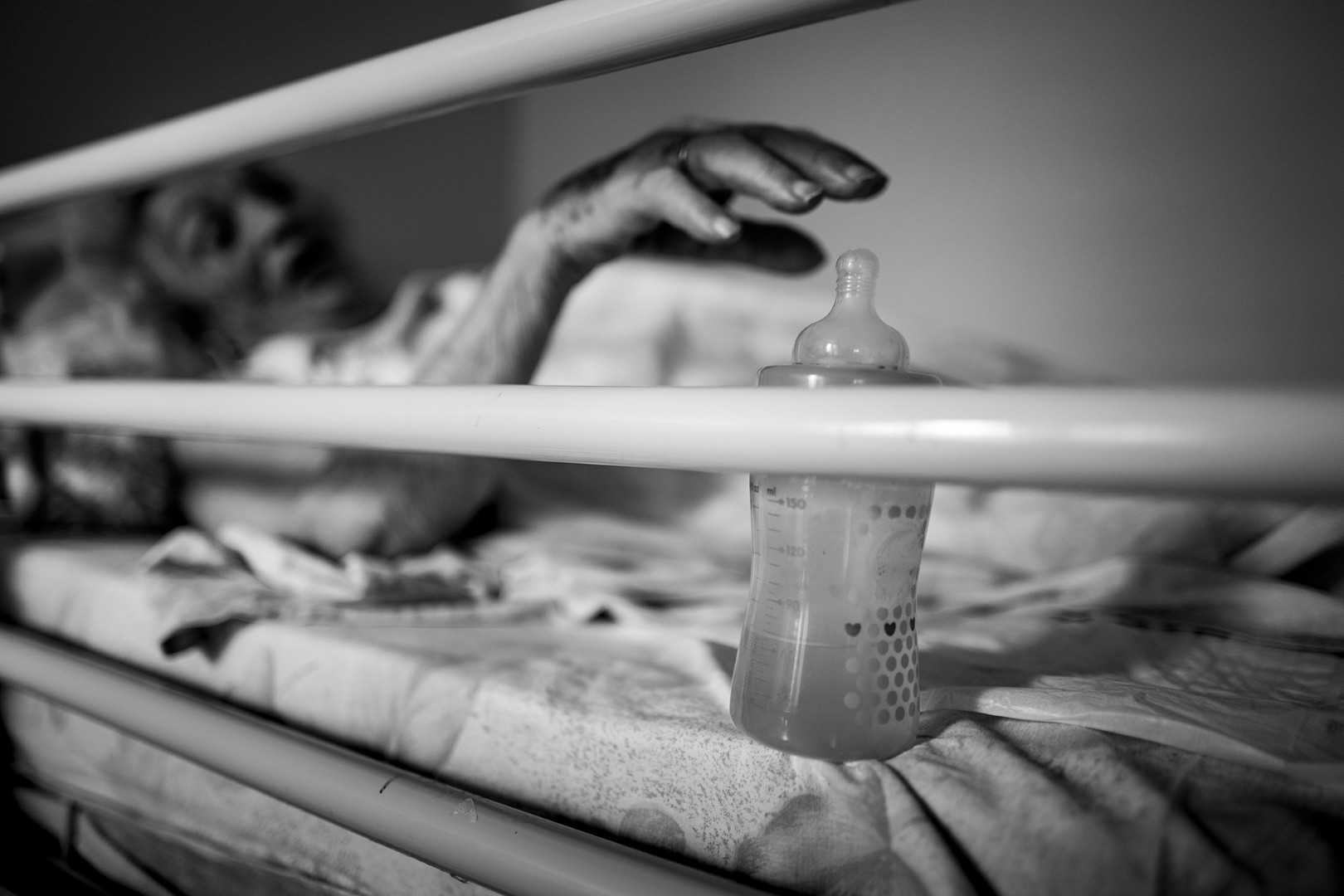
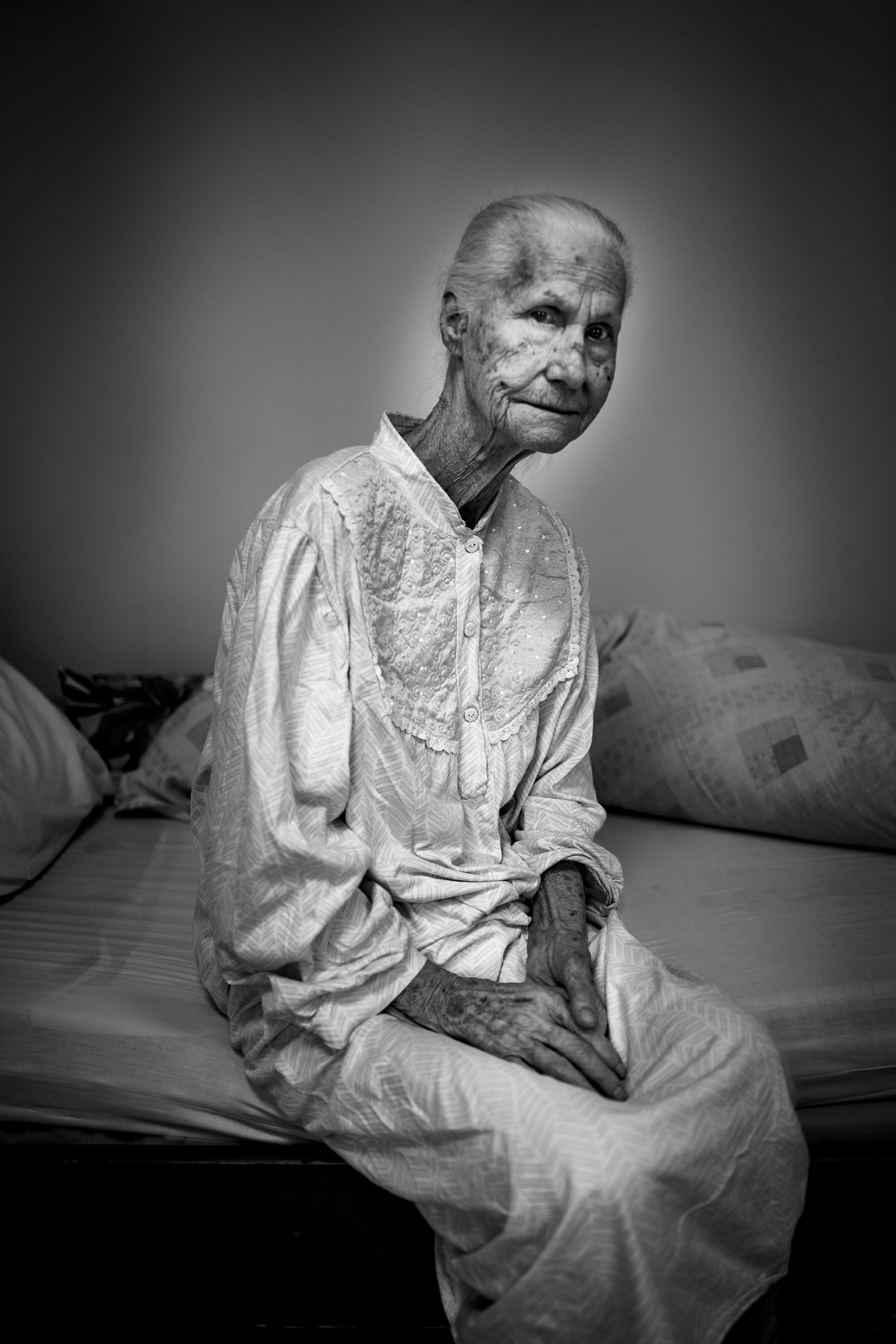
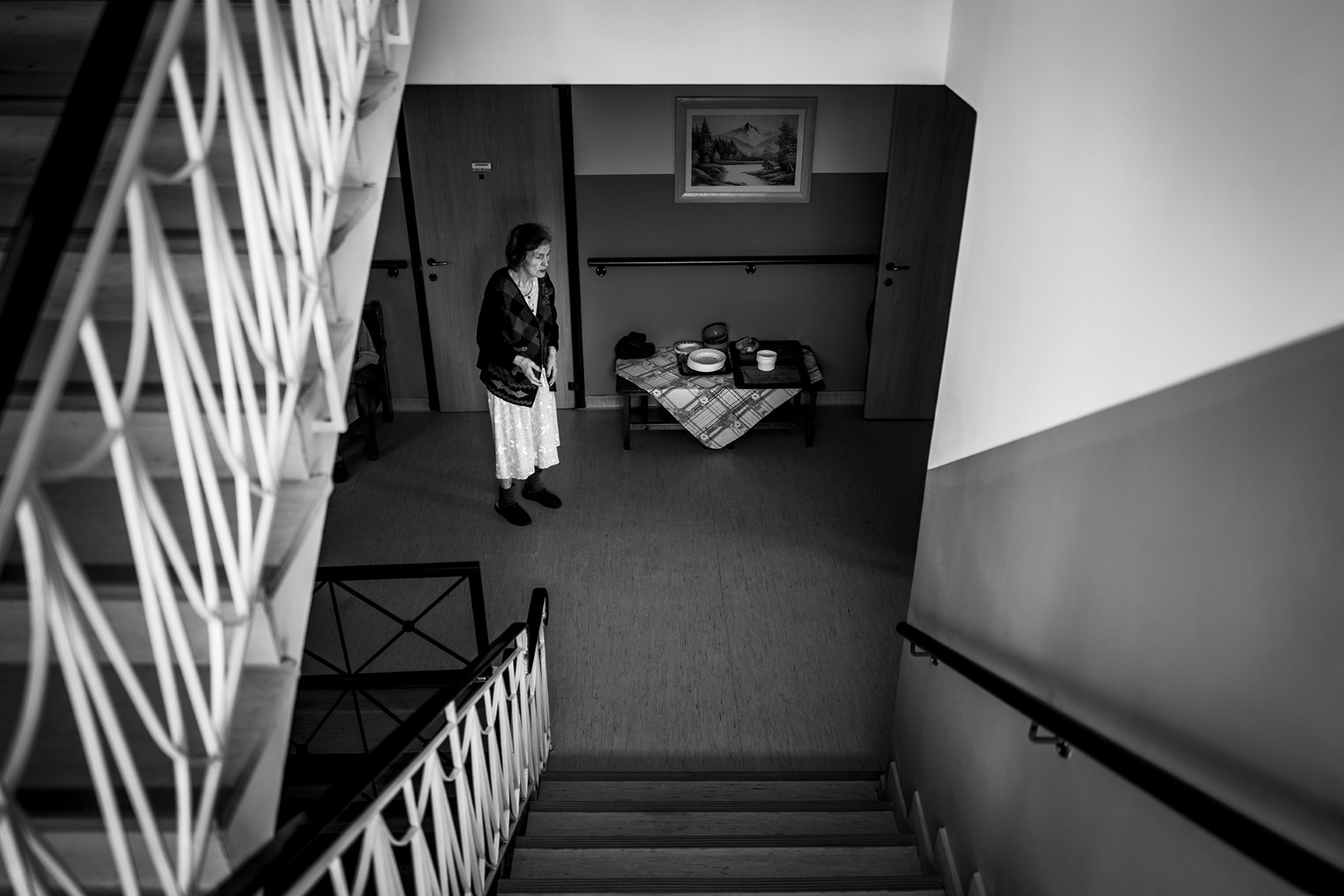
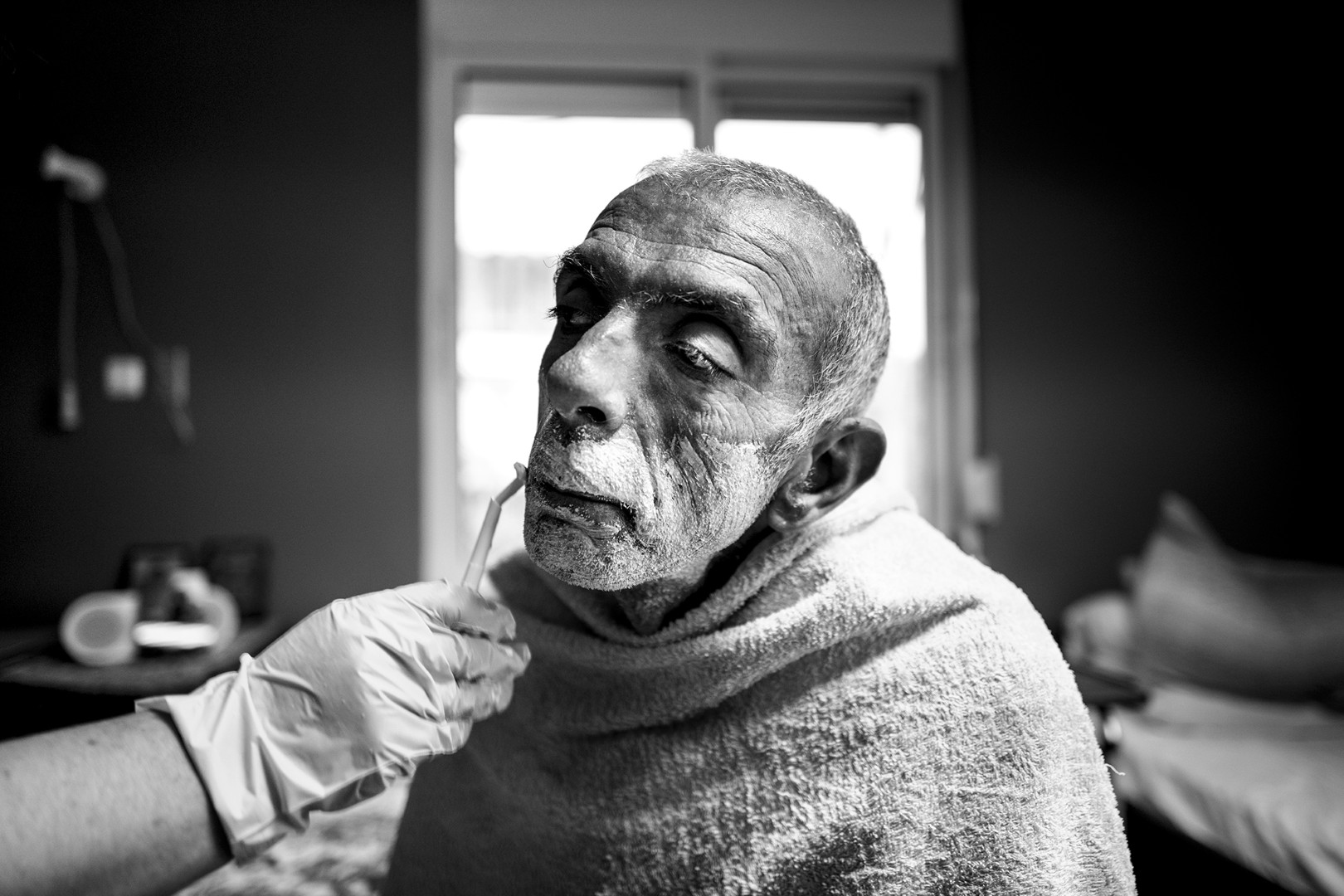
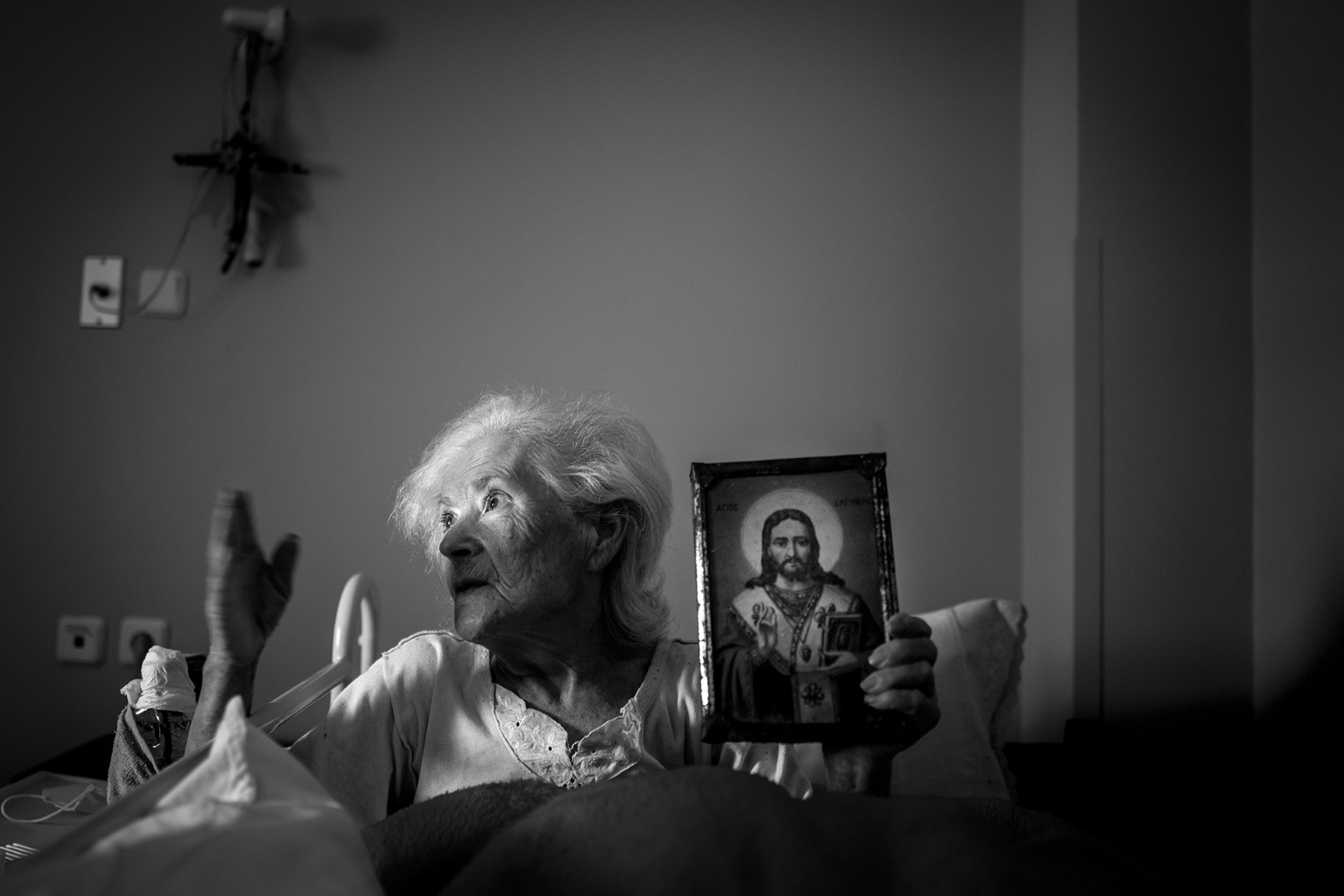
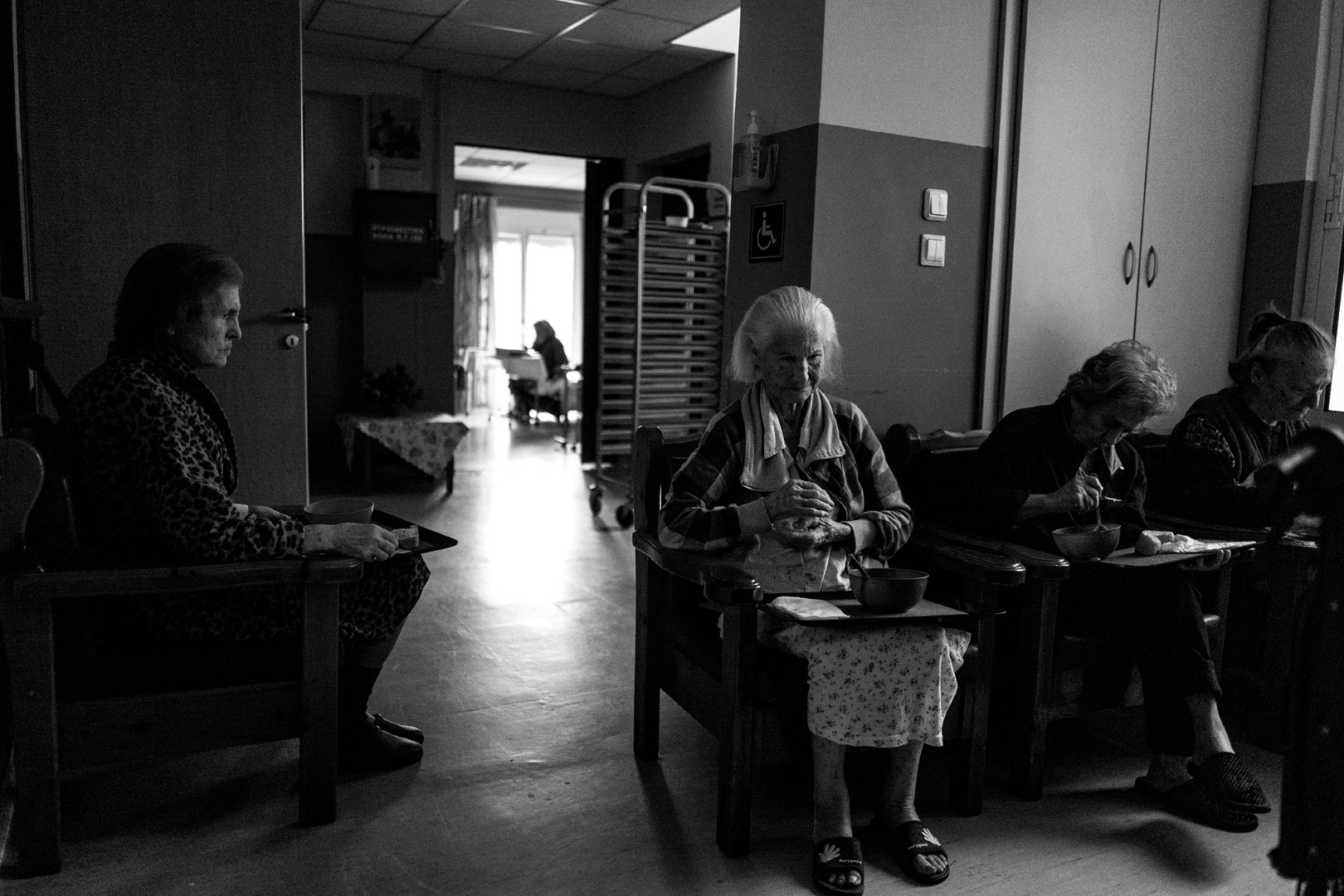
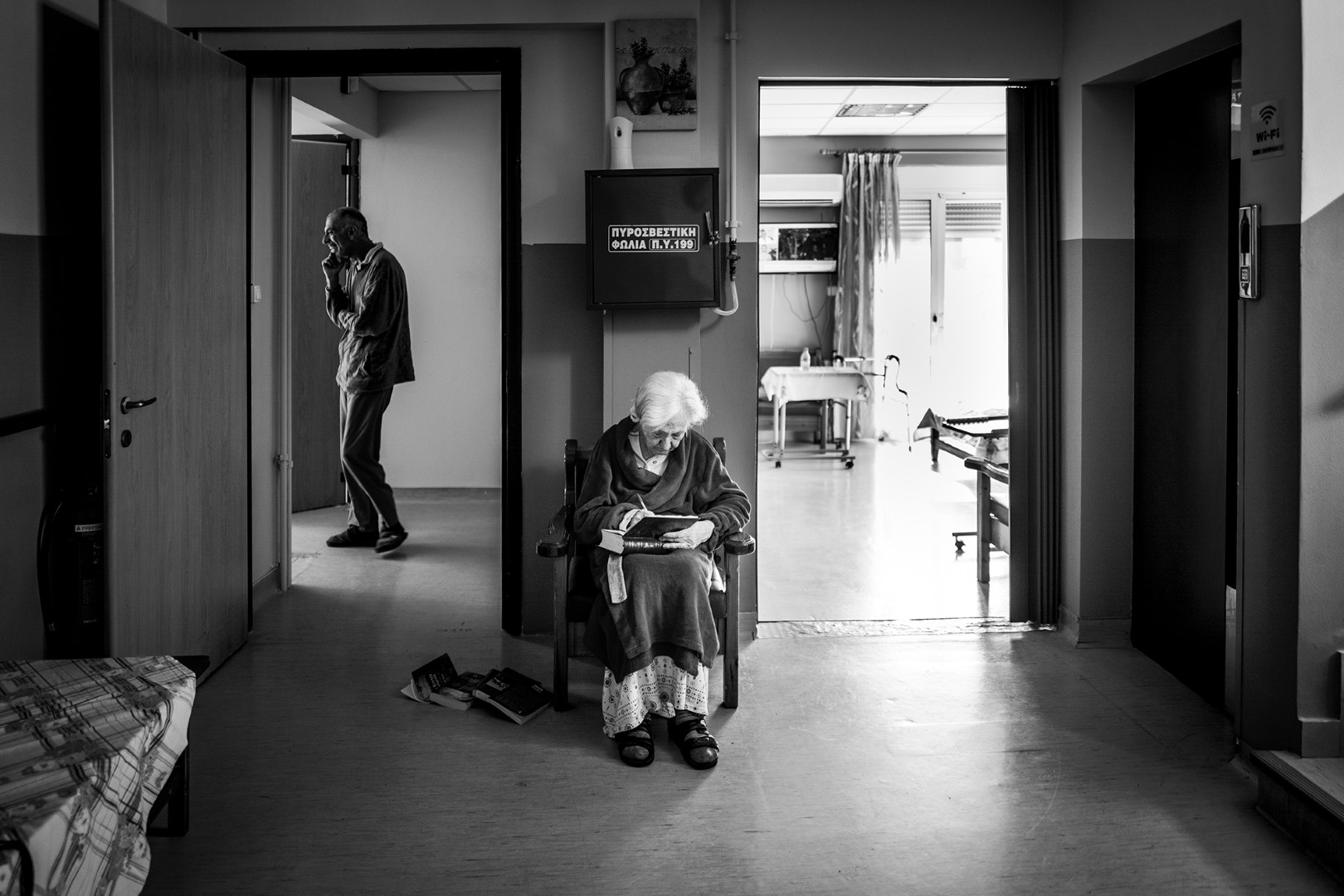
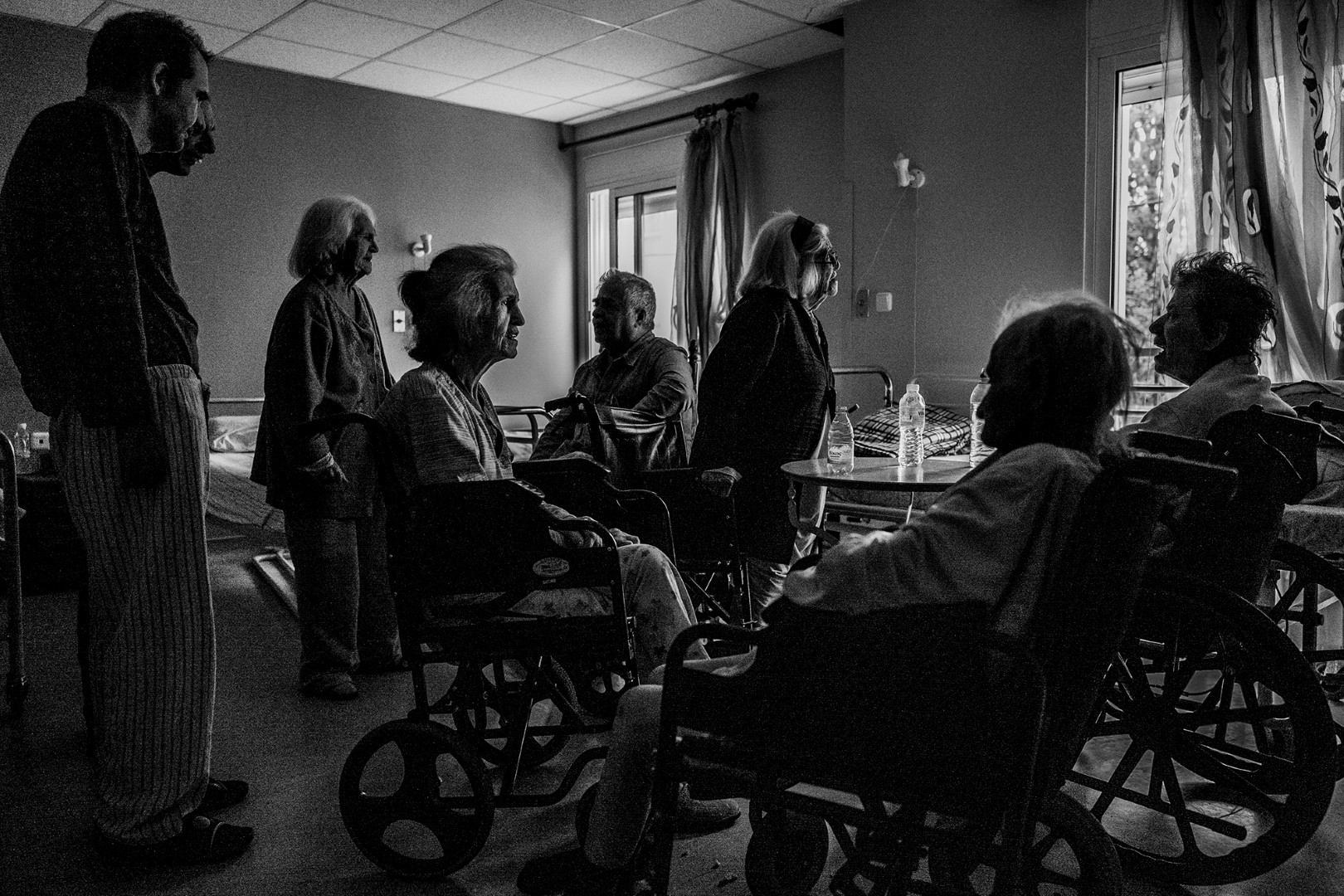
The photographic image is a frozen moment in time. The photographs of the nursing home residents,
as a whole, speak of a time that is dilated, even stopped.
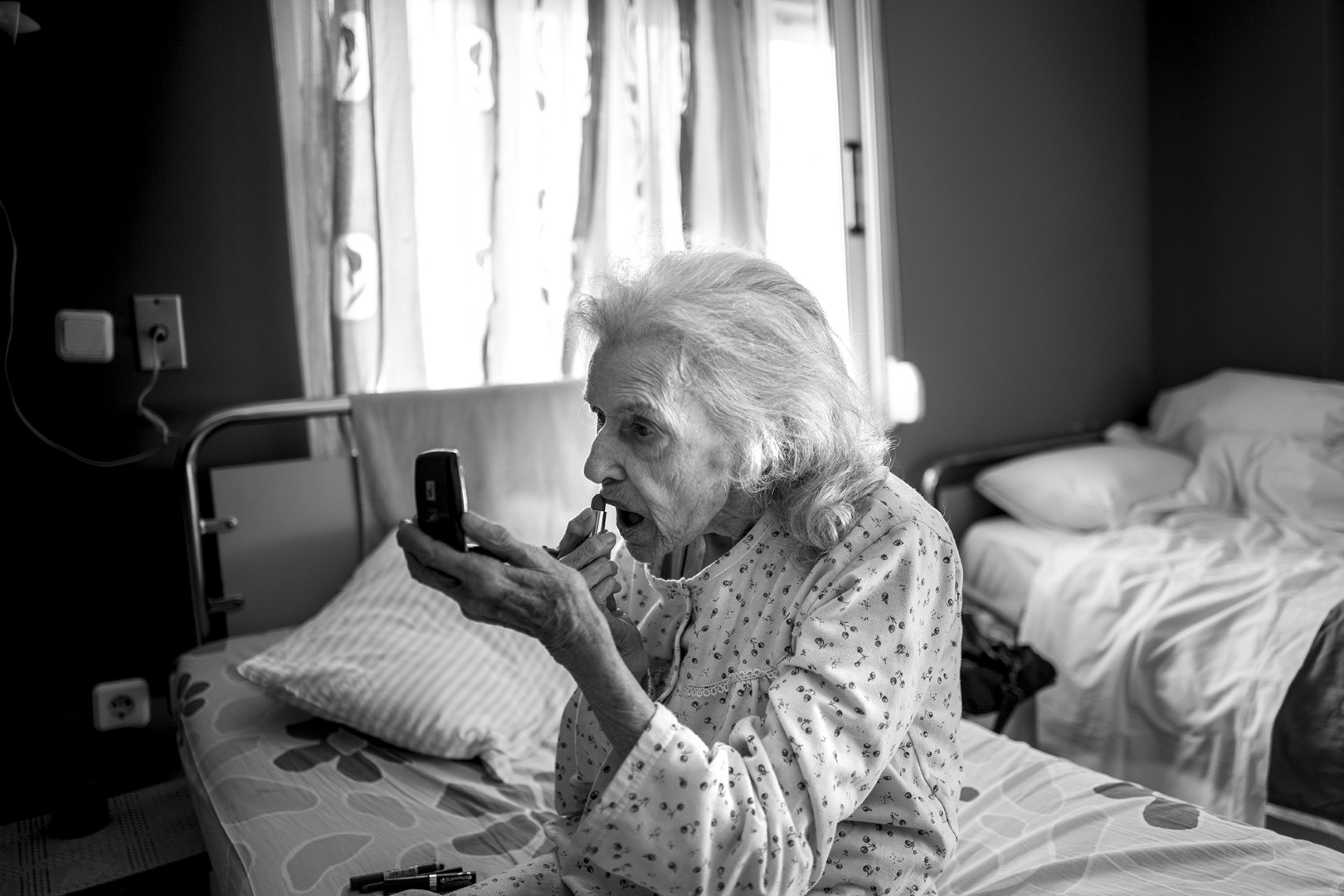
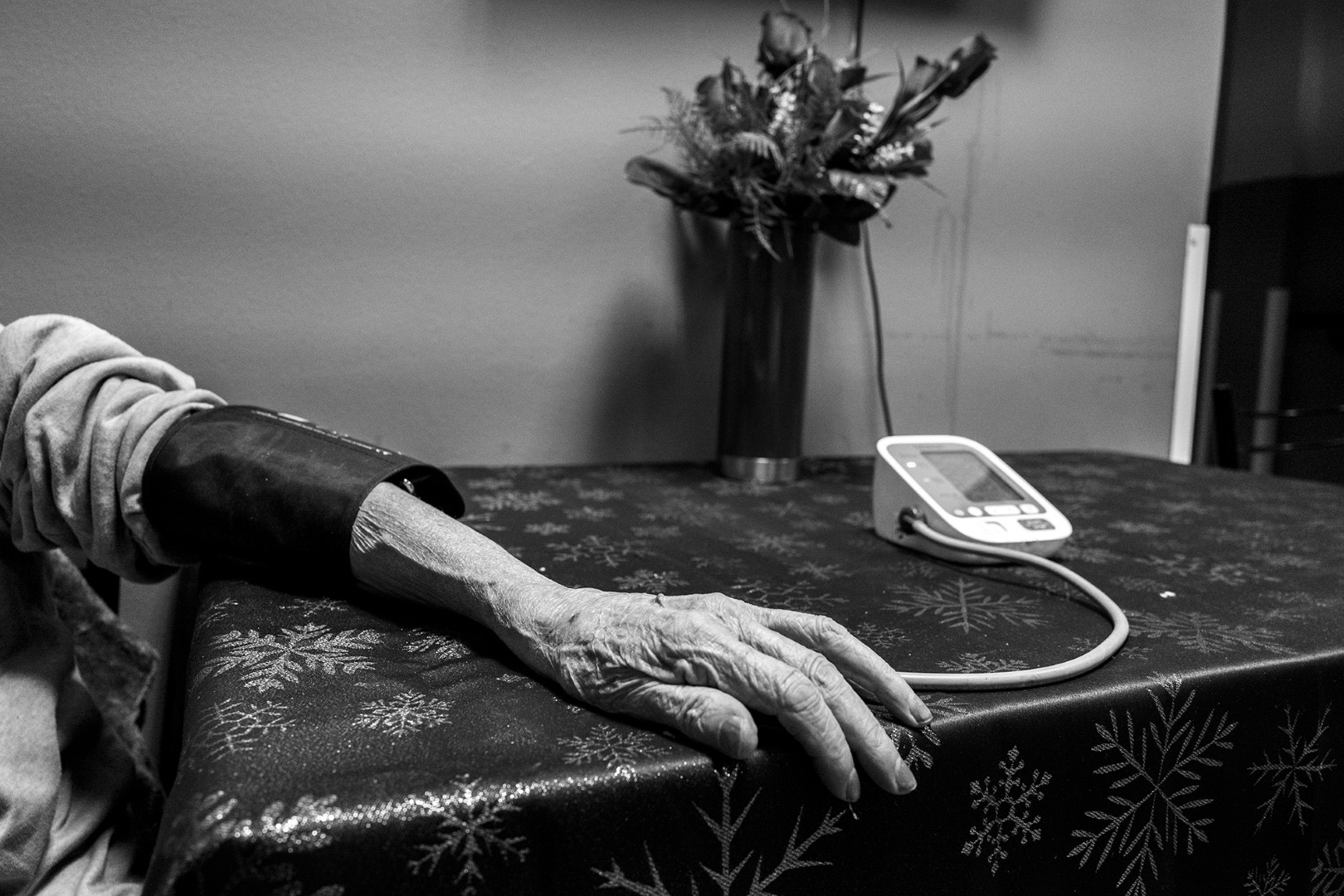
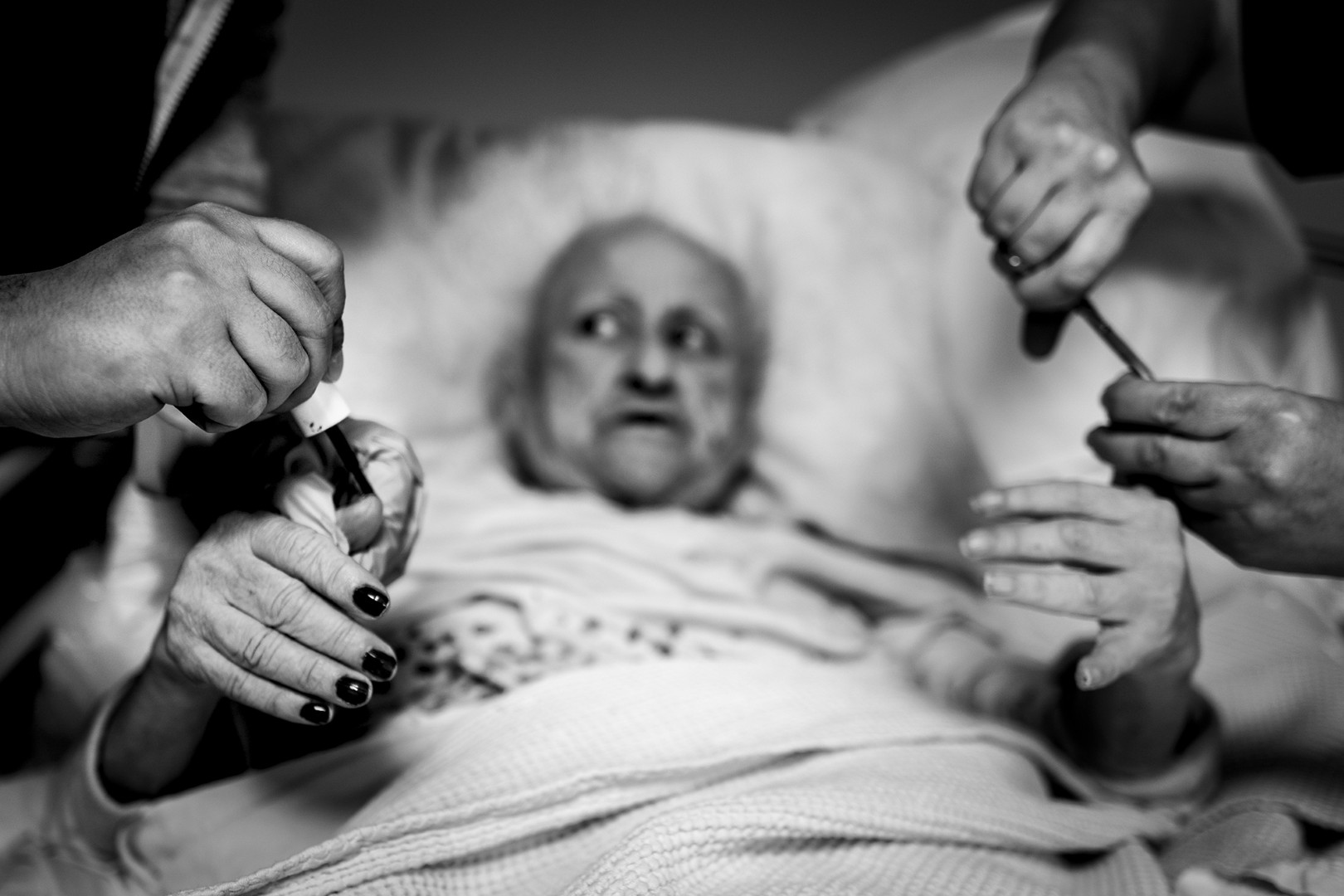
The rituals of personal care are perhaps the only signs of time still flowing within the nursing home.
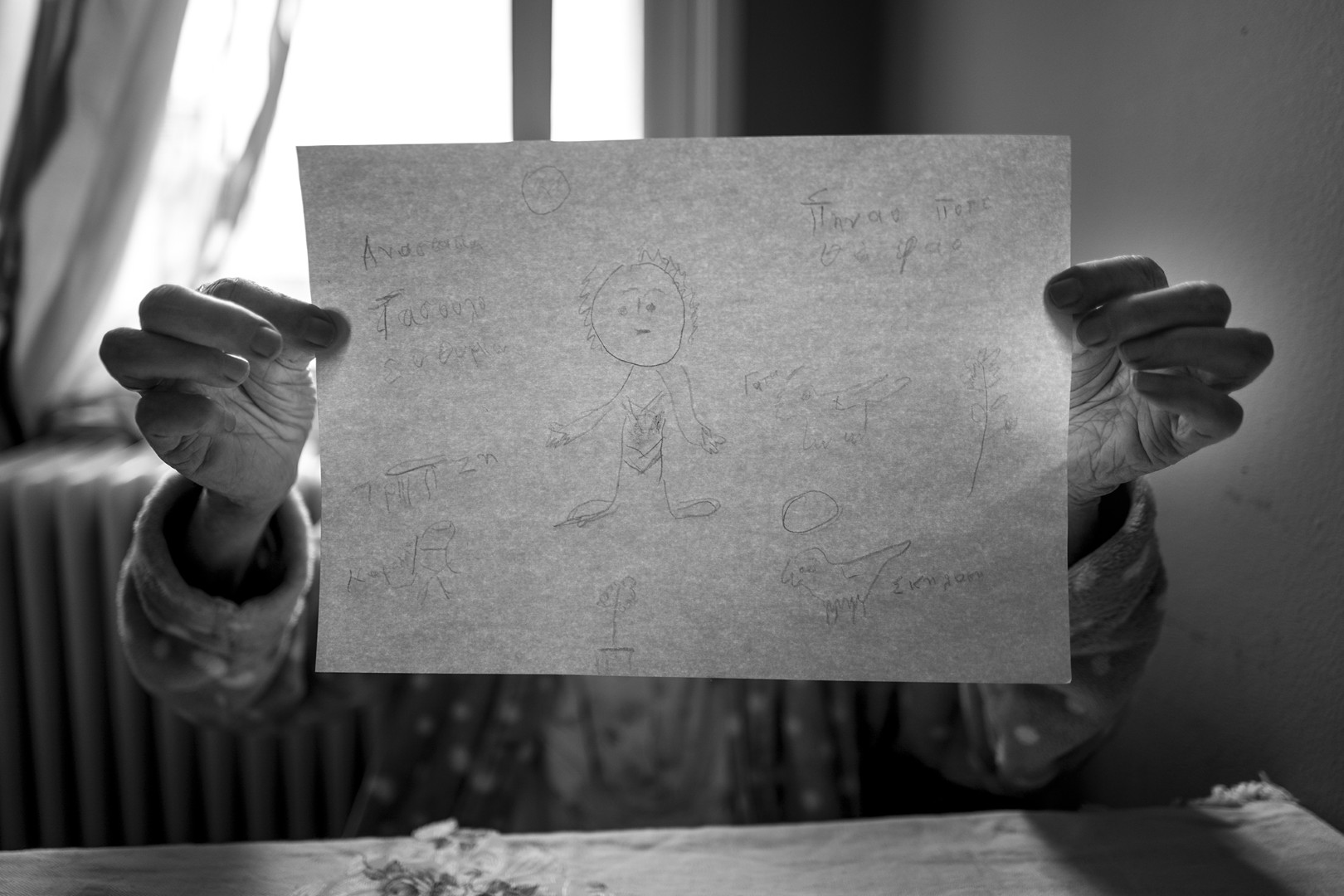
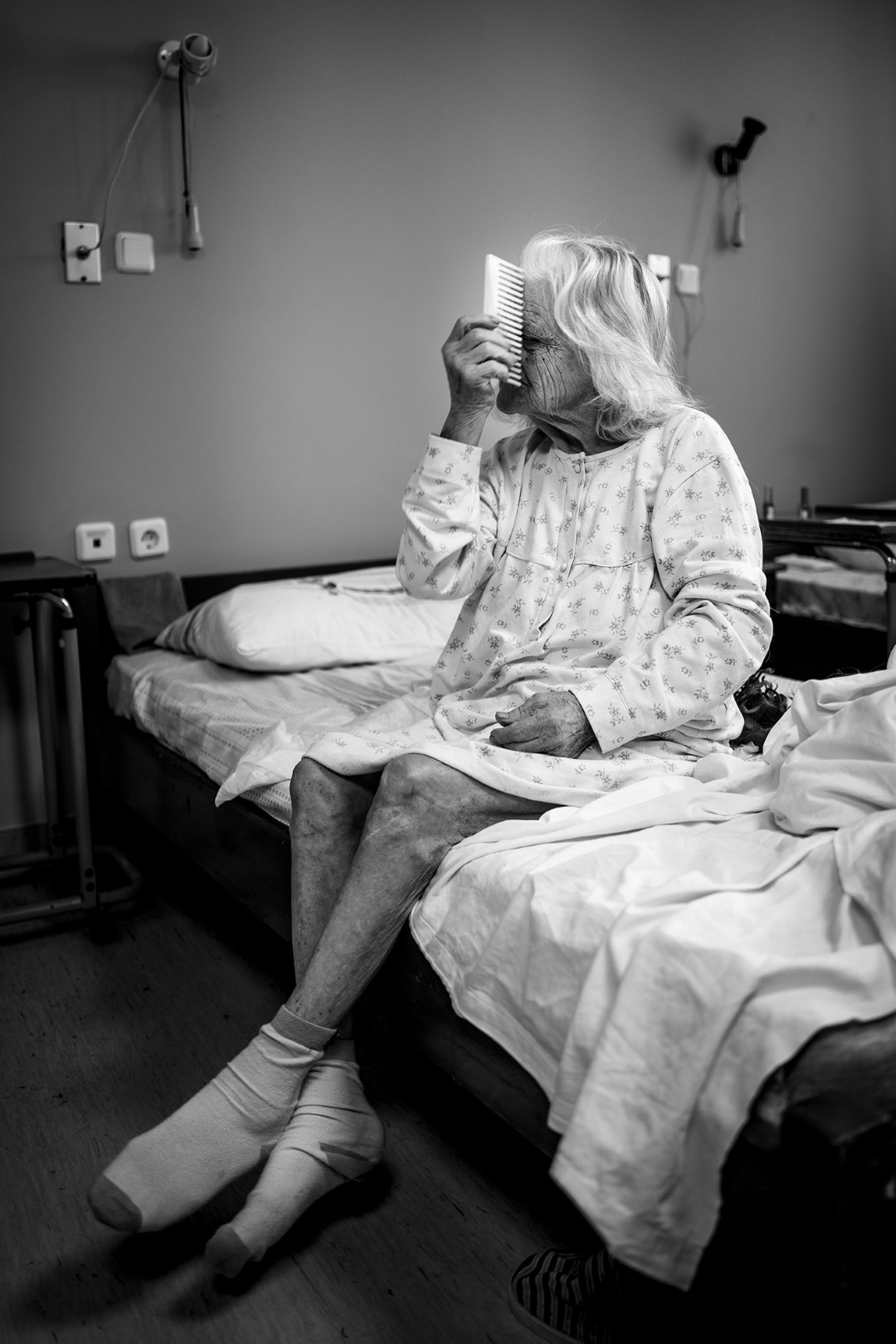
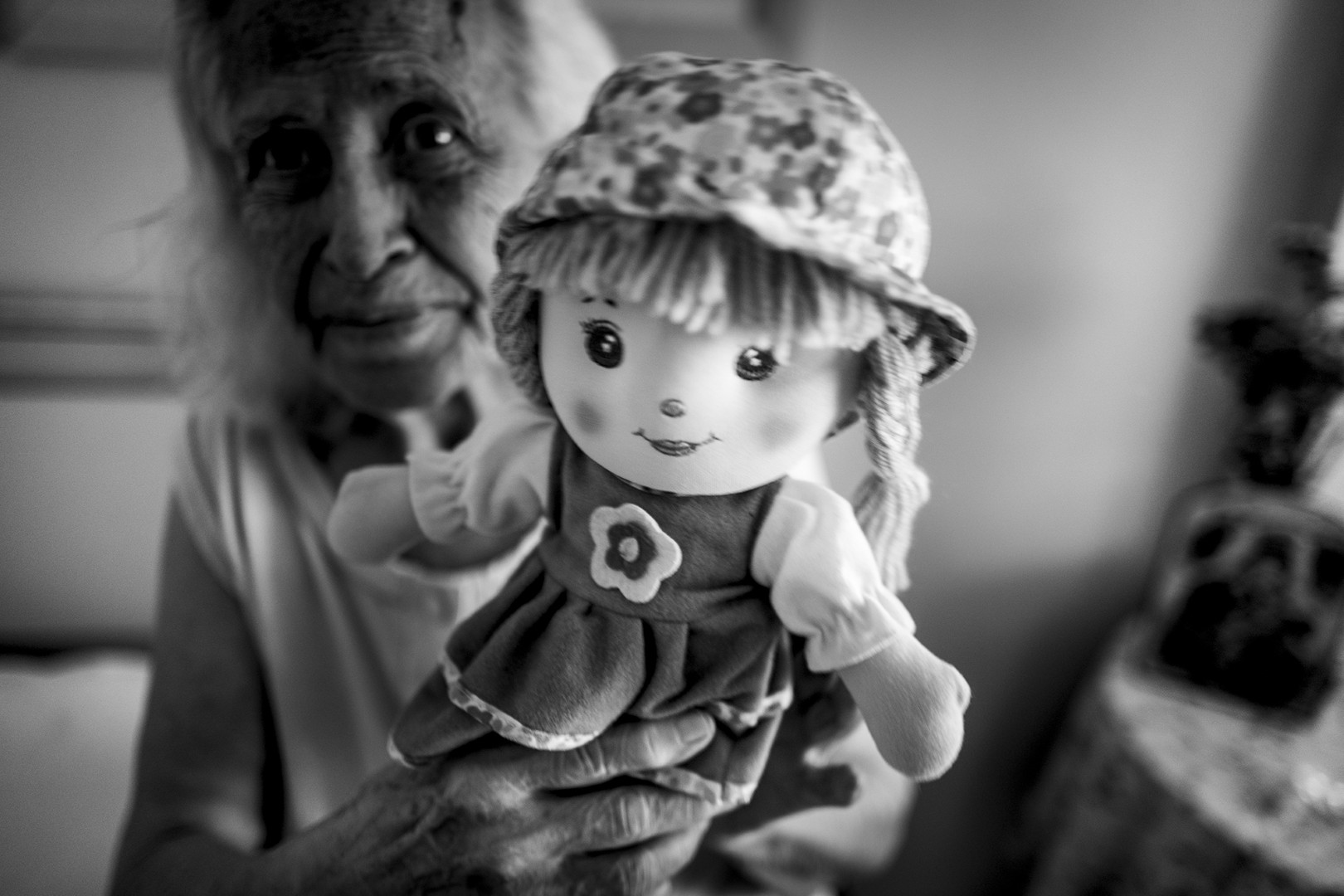
Conversely, the space contracts due to immobilization. Functional objects are now minimal. A doll, a
drawing, a comb acquire the weight of an entire material world.
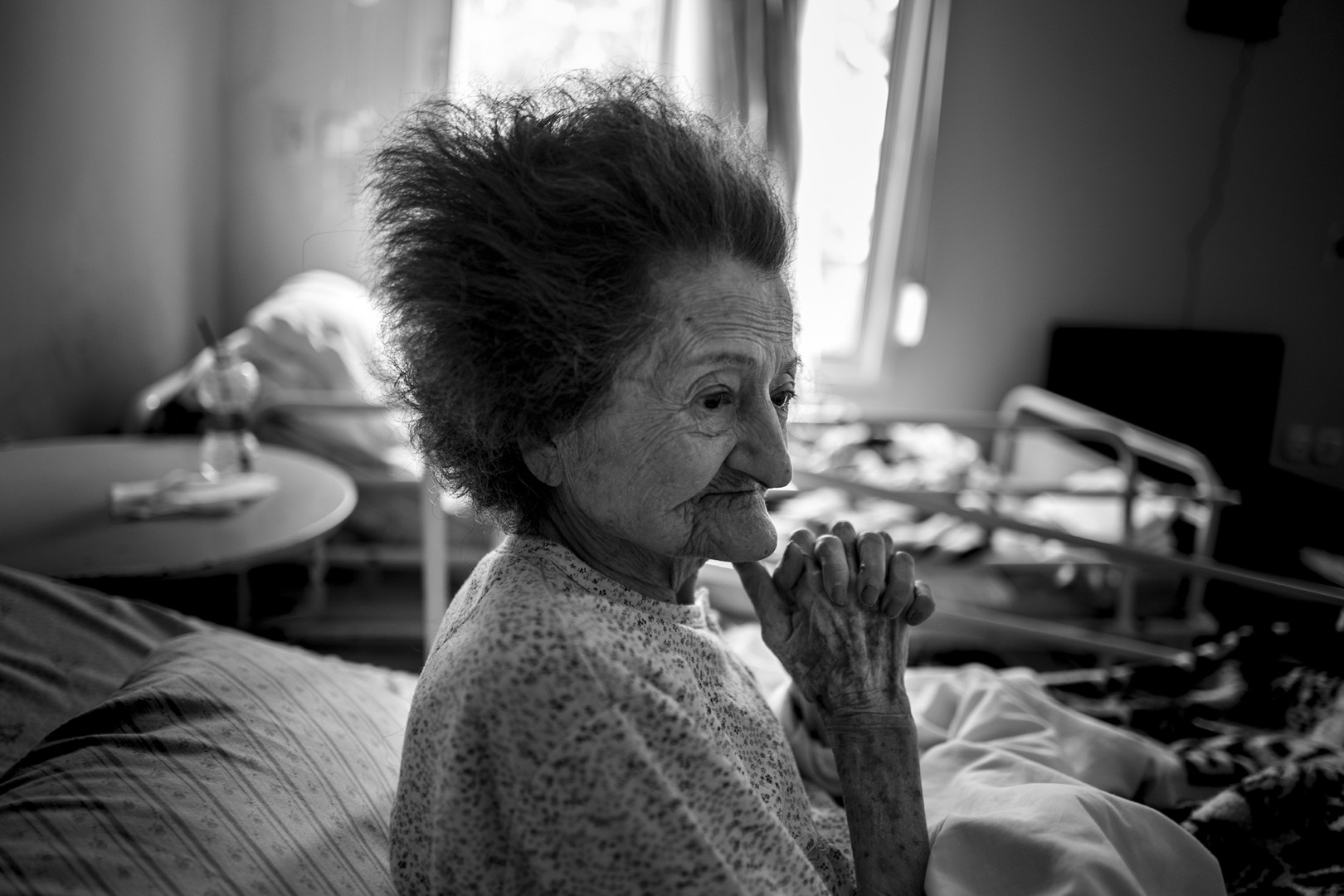
I could not avoid the thought of decay. Aging serves as the photographic vehicle of my concern. The
residents, standing at the threshold of death, want to play, to reintroduce themselves, to be liked.
They flirt, they groom themselves. Equally, I could not avoid the thought that we become children
again.
I “saw” this project as a study of time. My photographs led me to explore the boundary between
existence and non-existence.
Thus, I was led to investigate human theories of time as a passage. Whether time is an illusion,
another dimension, whether every moment in the past, present, and future is equally “real,” whether
time is eternal, or whether only the present and our momentary perception of it exist.
It seemed to me that the nursing home’s cast is existentially trapped in a temporal wormhole. What
we think of as death might be a temporal distortion. That is why this cast grooms themselves, why
they play; they seem to know something more than we do. They have transfigured into their next
selves and acquired traits of decay yet, strangely, also traits of incorruptibility, in terms of eternity. This
version of themselves belongs to another time; it is otherworldly.
The rift of time, beyond every class, ideological, professional, or temperamental division, is our
common fate. It represents our postmodern collectivity, which hurtles technologically and ideologically
toward immortality and sometimes behaves as if it has already achieved it.
By introducing myself as an observer into a community, small or large, distinctly separated from the
rest of society, I encountered subjects living on the fringes of society—either out of necessity, choice,
or pseudo-choice. These subjects develop characteristics of confinement and operate as Kafkaesque
casts against the irrevocable terms of a system that is sometimes paradoxical, sometimes bizarre,
sometimes dark.
They raise questions we avoid facing. For instance, how have we as a society accepted the way we
treat the elderly? Are we in harmony with our traditions so far? What does this mean for our culture?
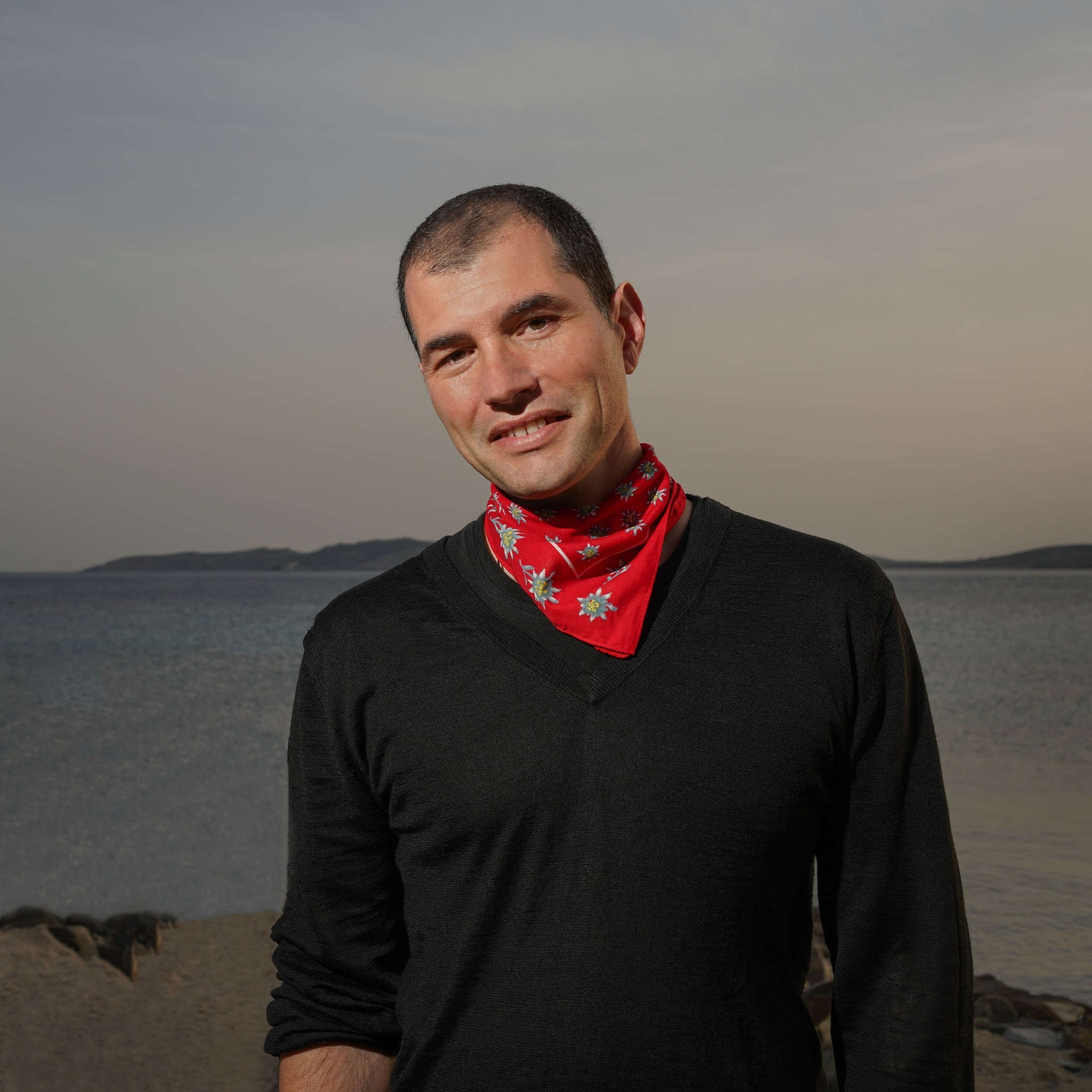
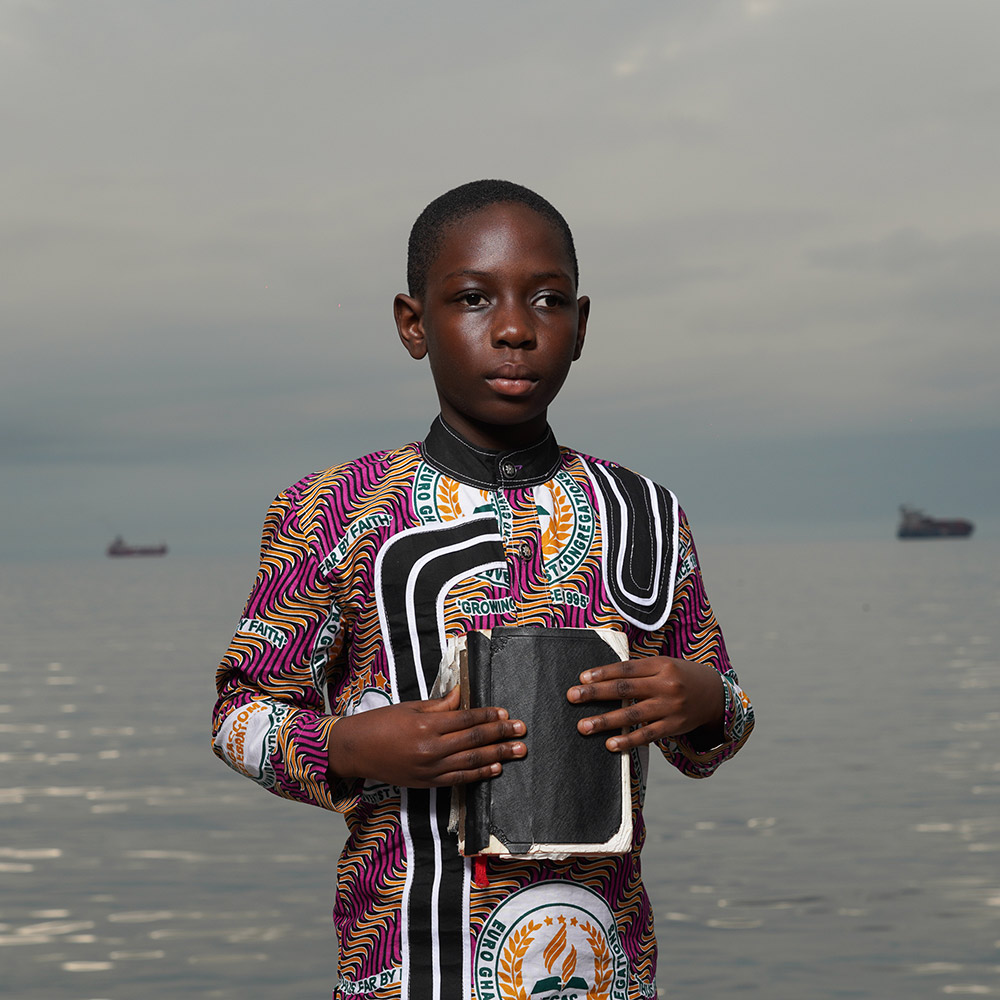
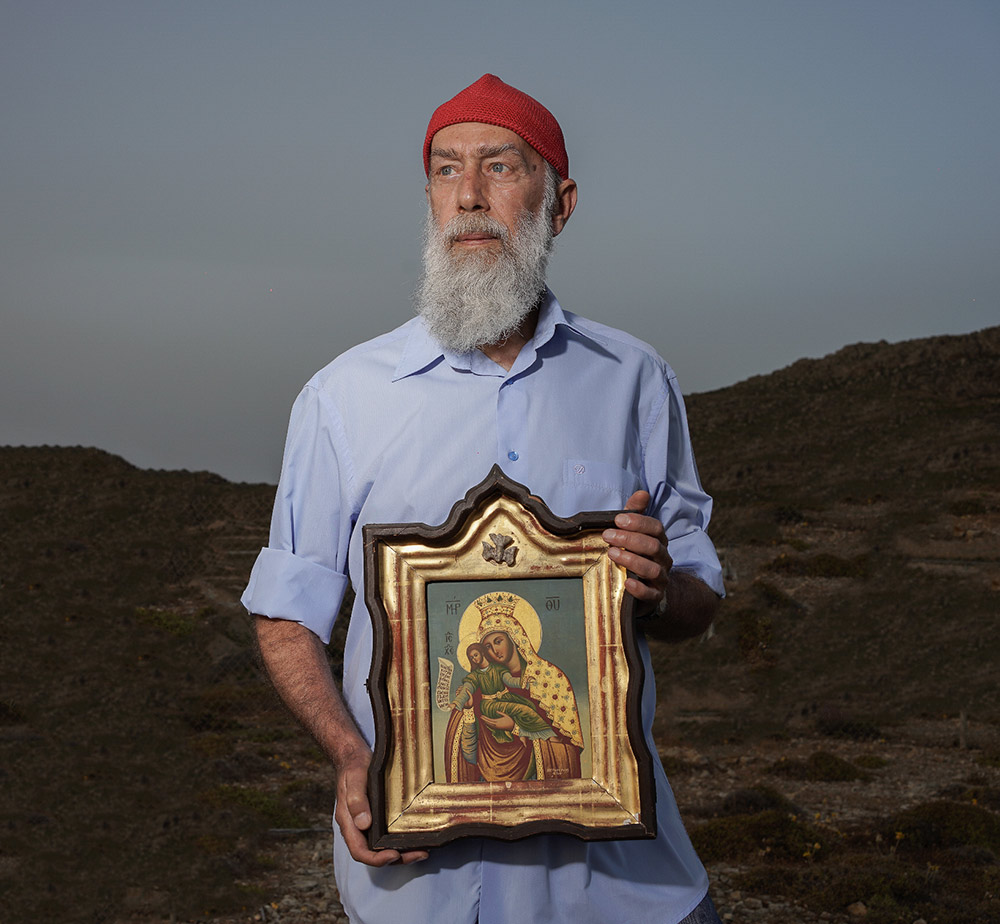
Spyros Paloukis, member of the Chamber of Fine Arts of Greece (EETE), approaches photography through personal documentary work. He creates portrait series driven by the need to tell stories, connect with people, and decode his environment. The three words that describe his philosophy and work are “freedom”, “faith” and “love”.
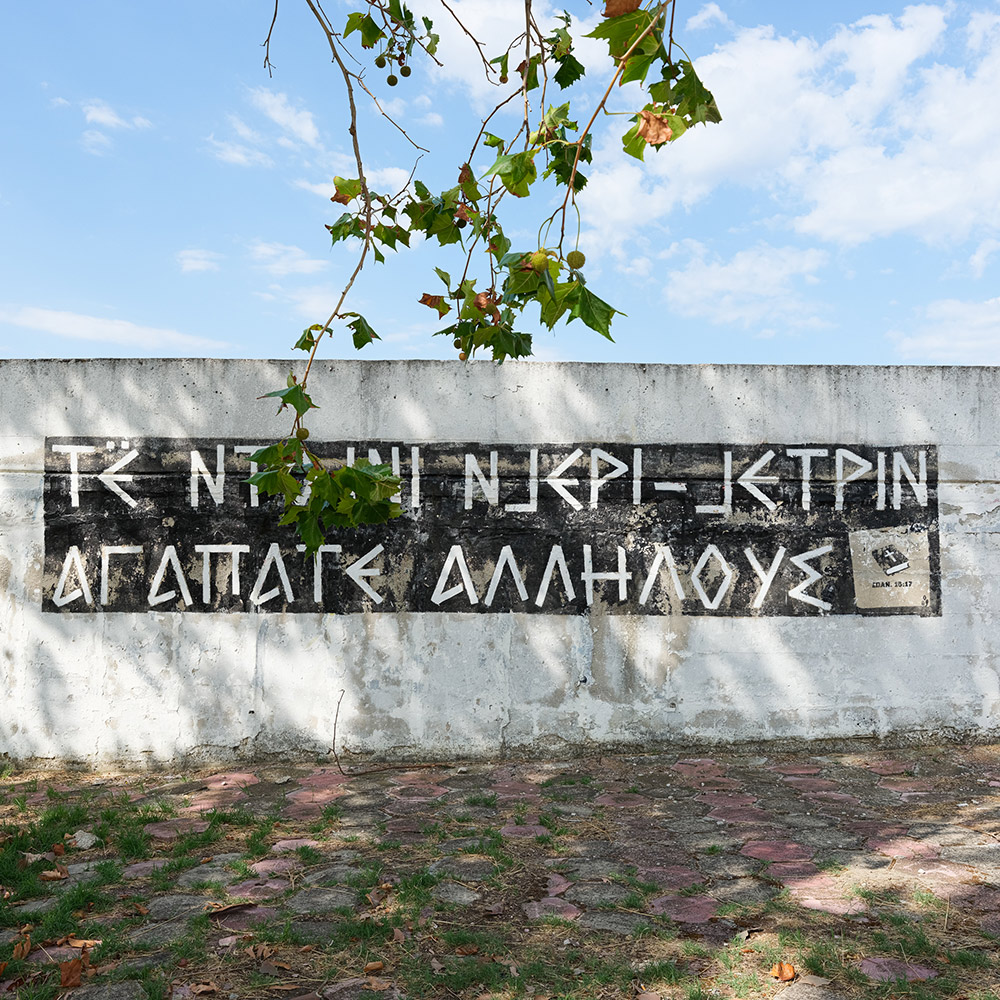
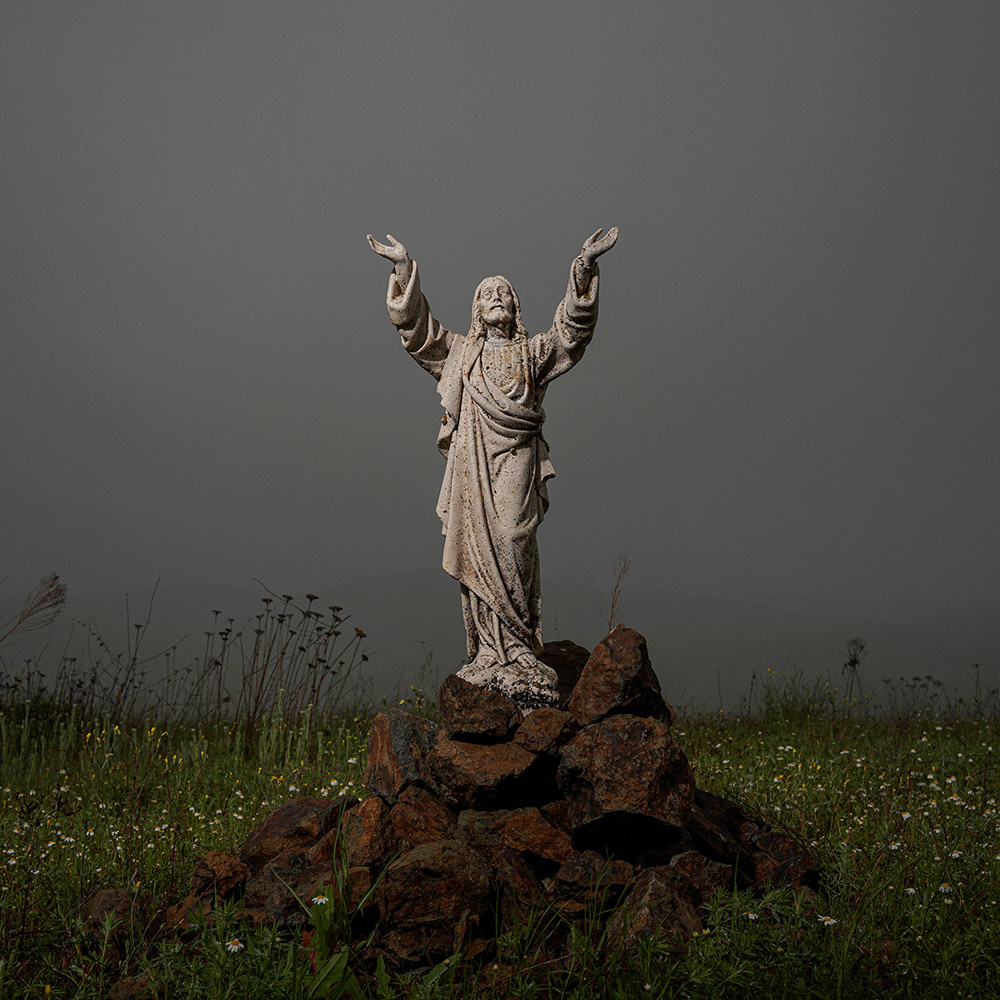
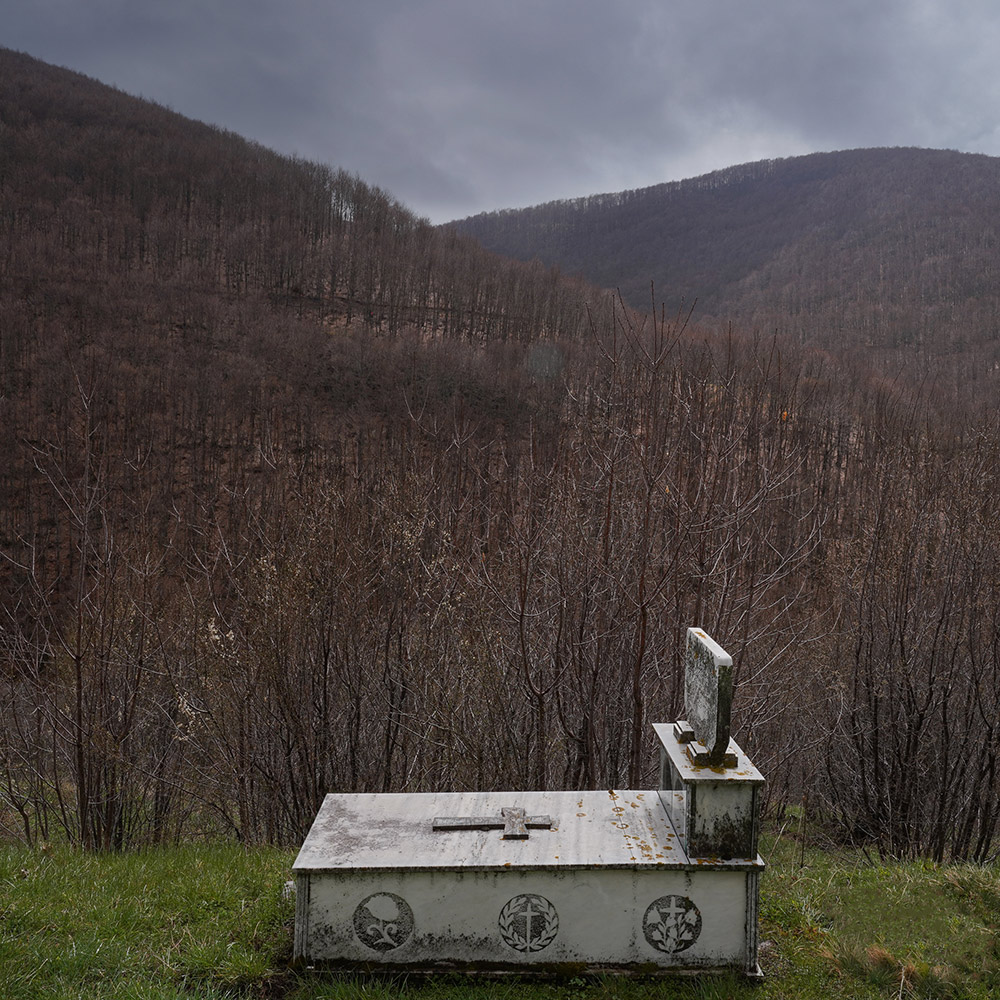
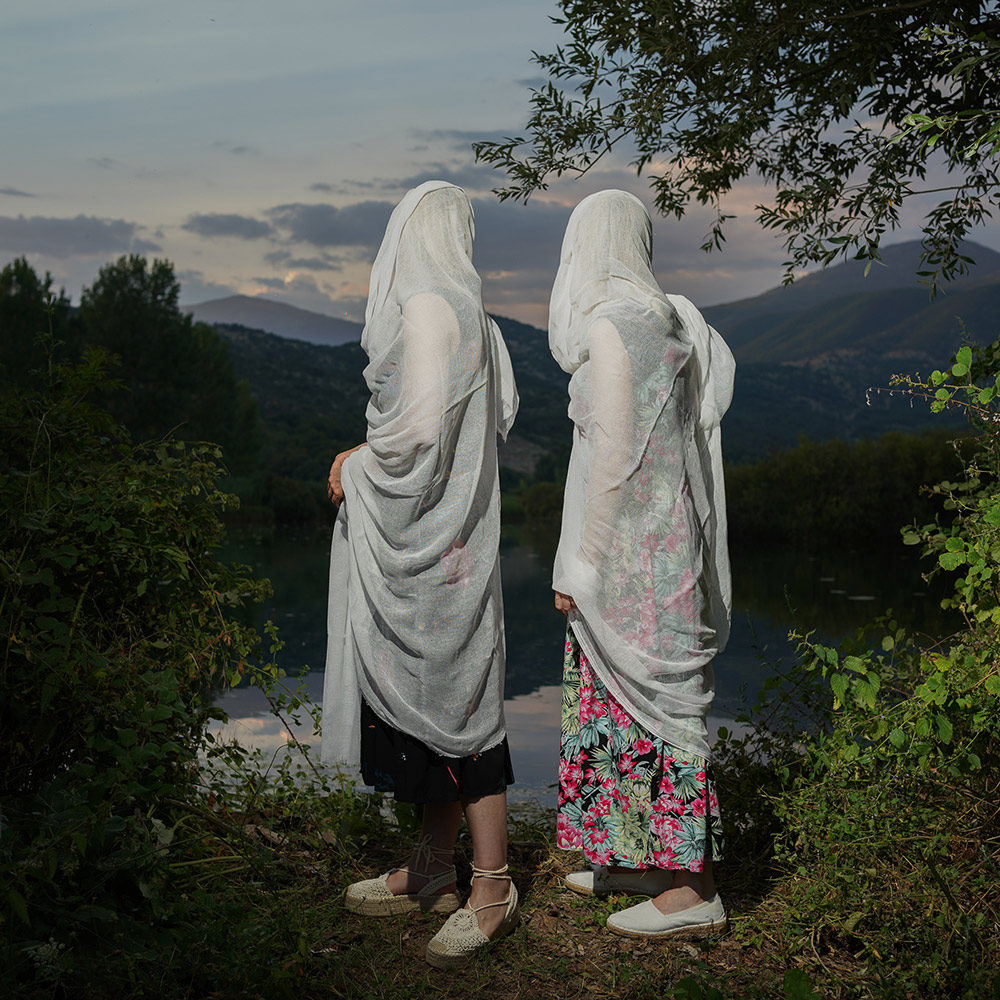
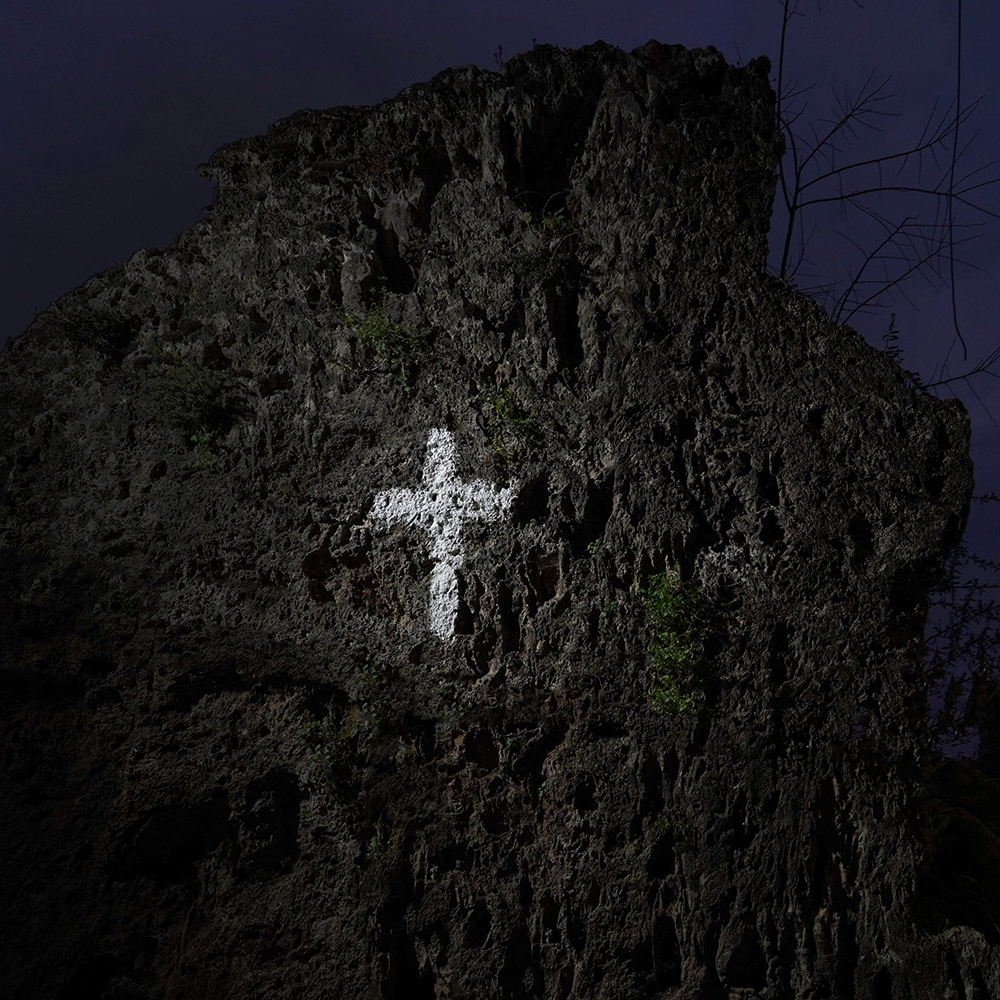
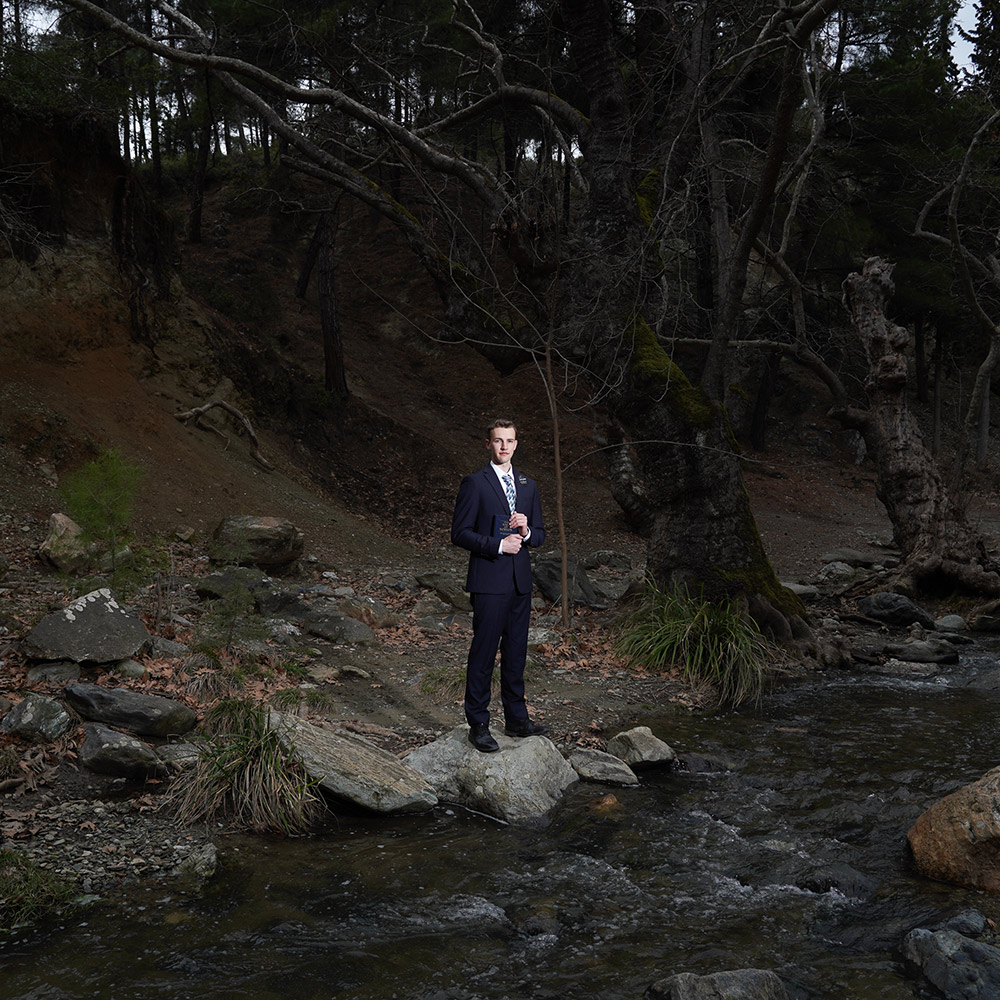
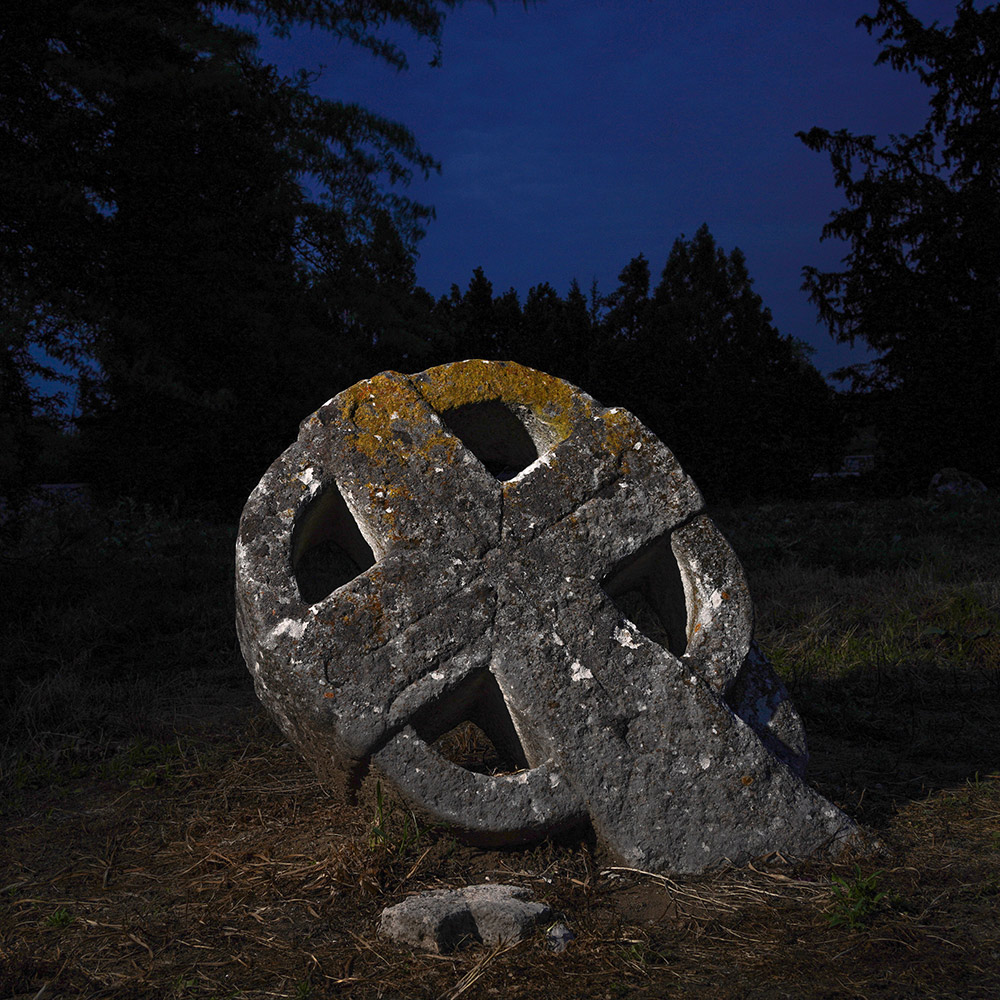
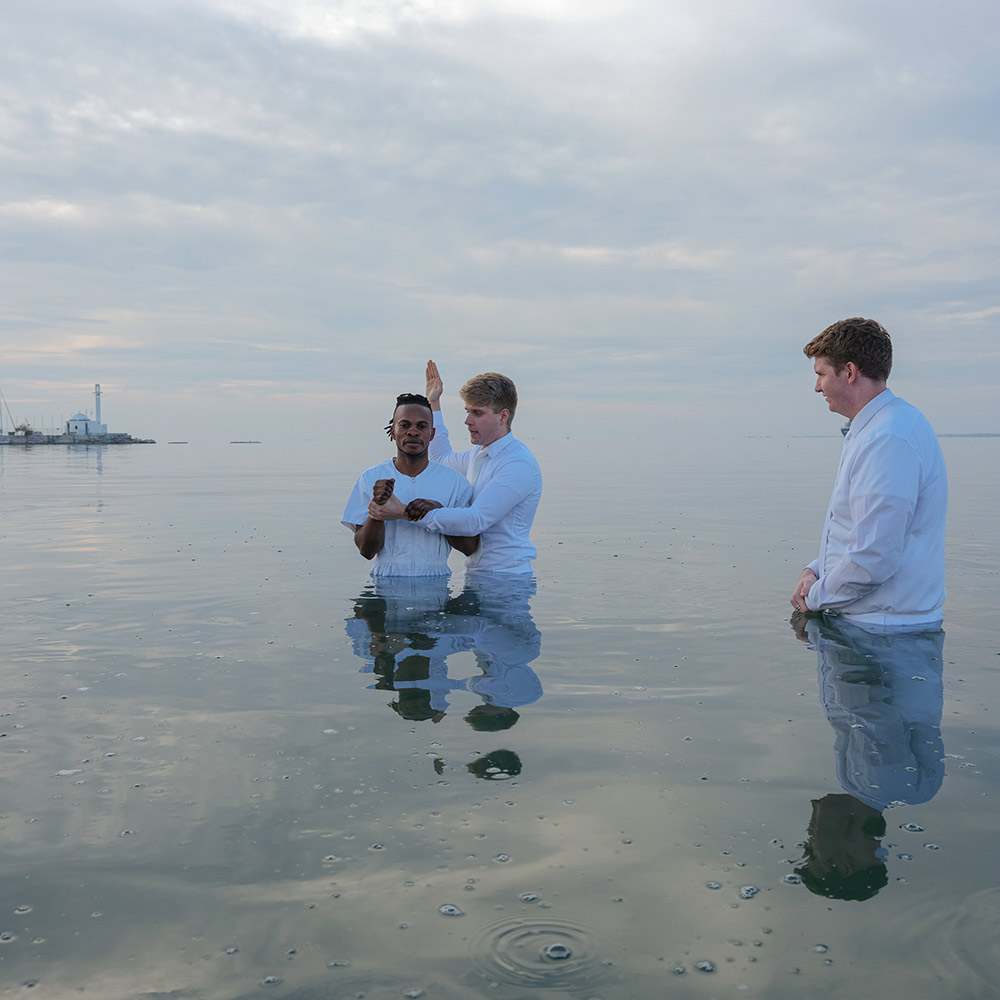
He focuses on long-term photographic projects inspired by the Bible, Greek mythology, and his personal experiences. In the last five years, he has been actively photographing the award-winning at APW “Love One Another: The Portrait of Faith in Greece”, an exploration of the polyphony of religious expression in Greece, and the upcoming project about Mykonos titled “Light of Light”, which is a personal reflection of his life on the Cycladic island.
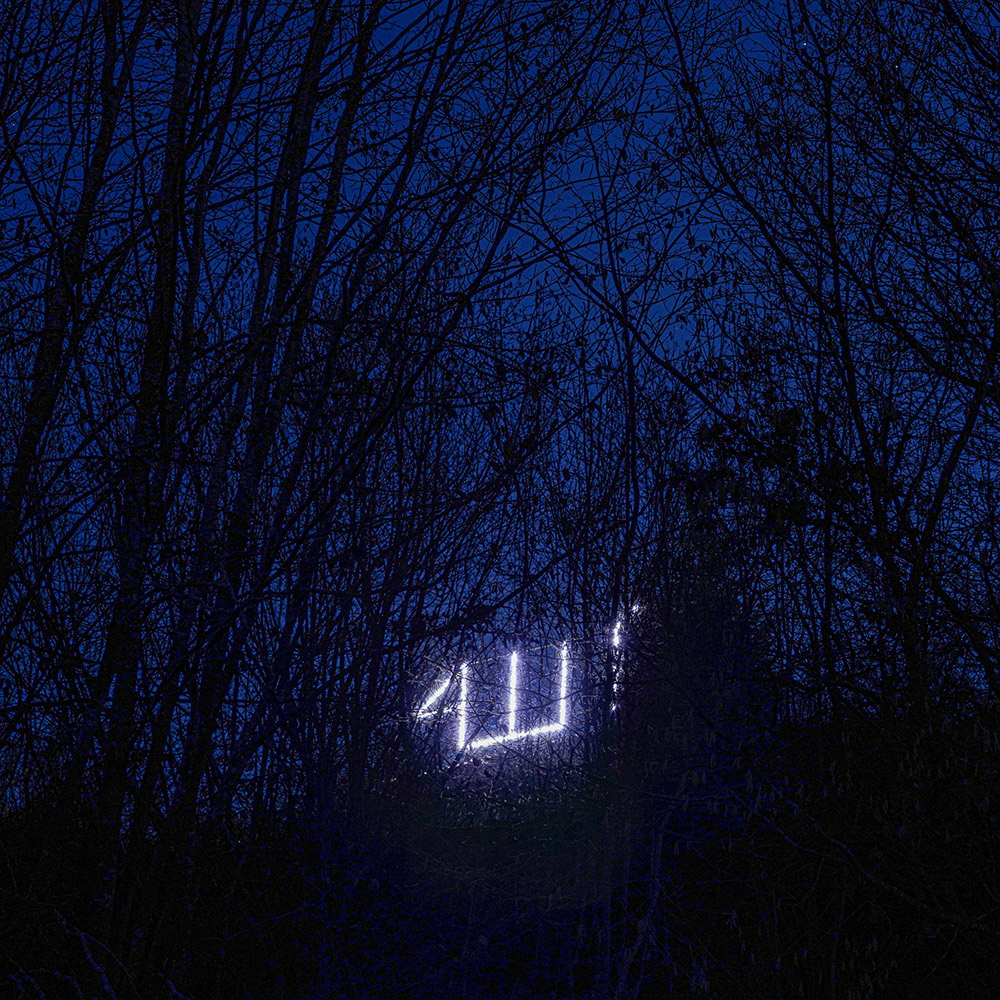
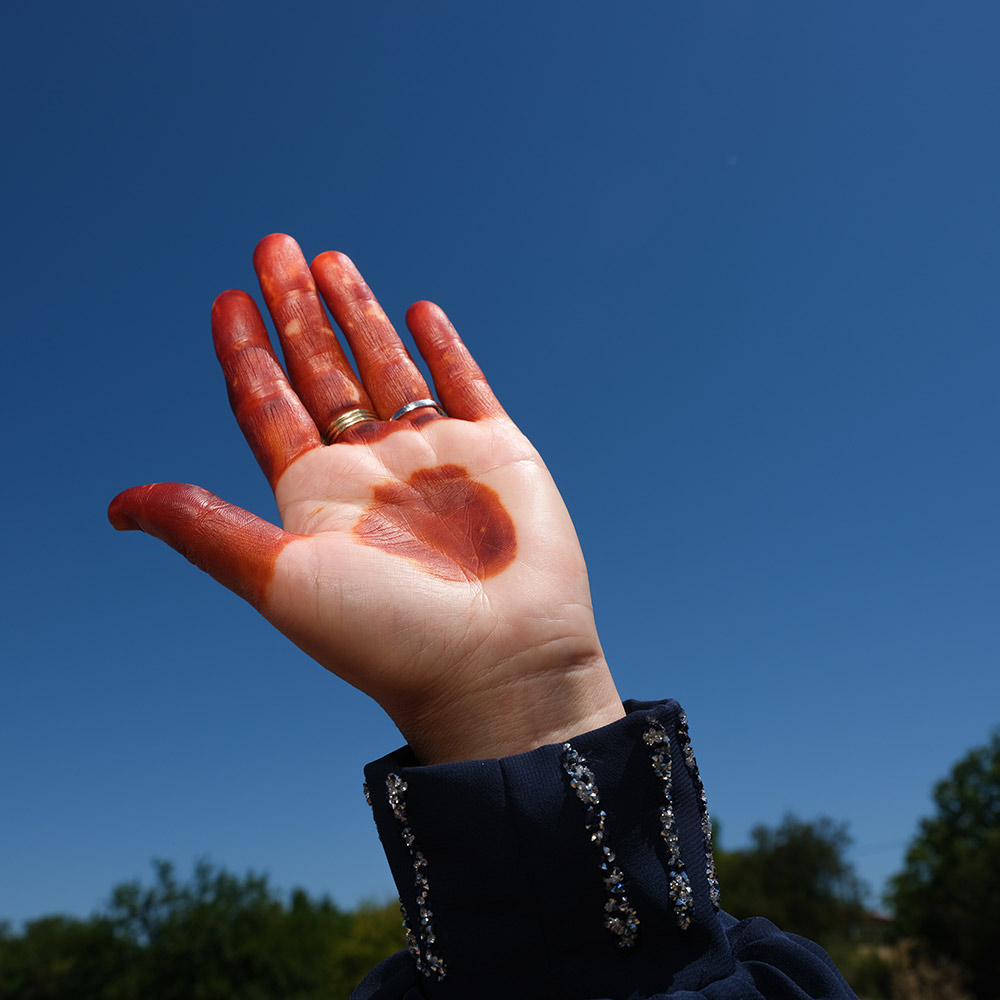
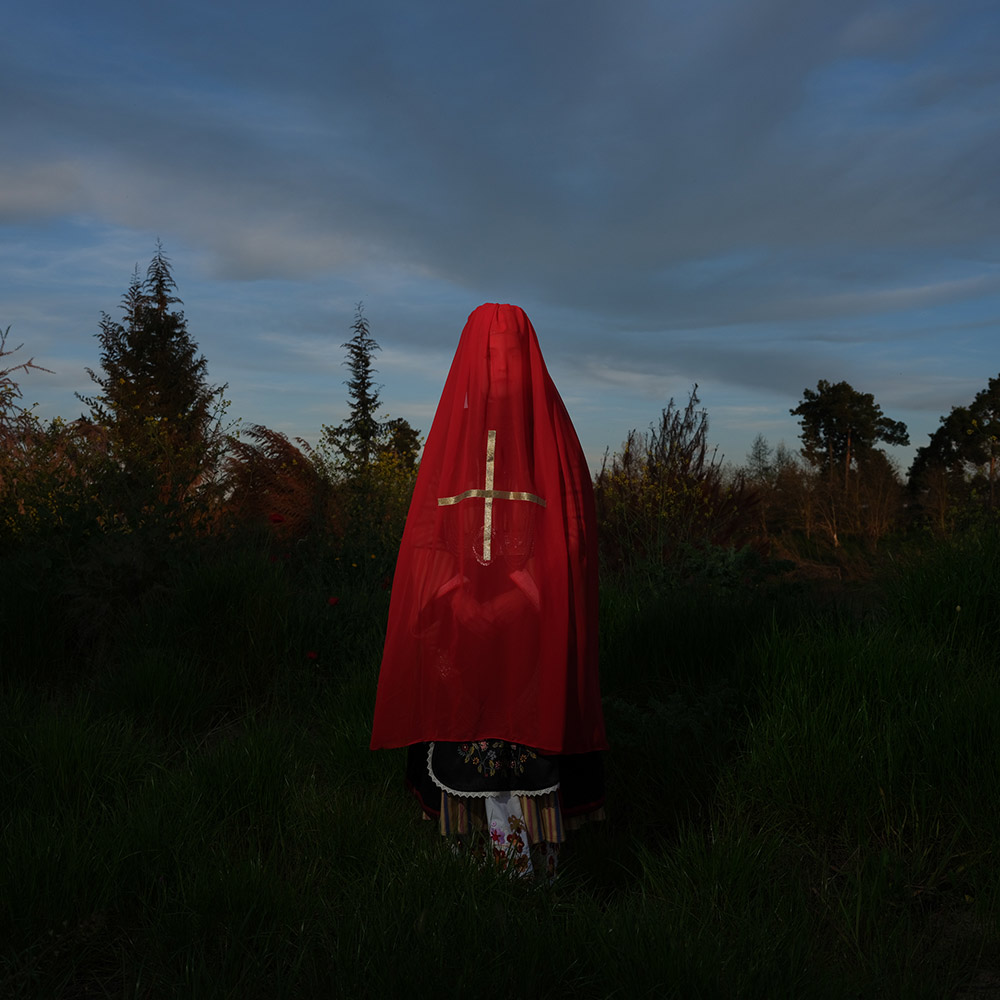
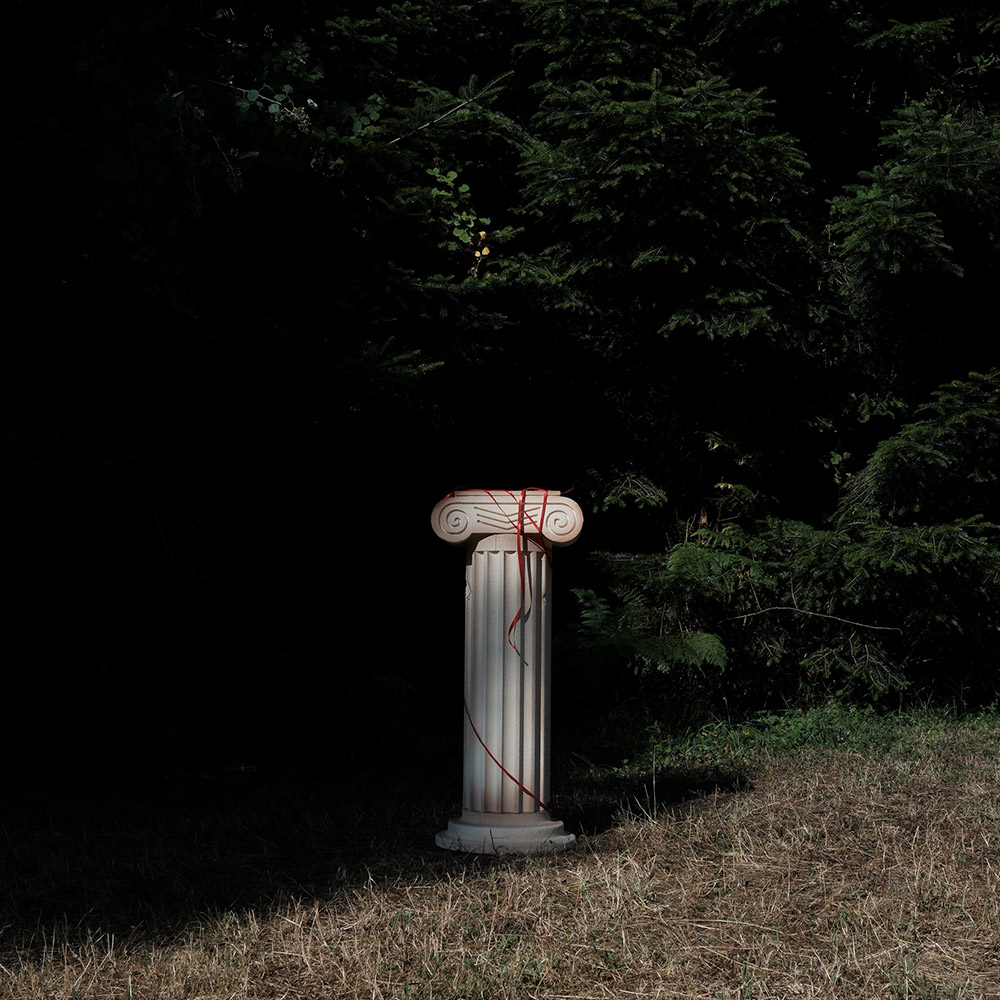
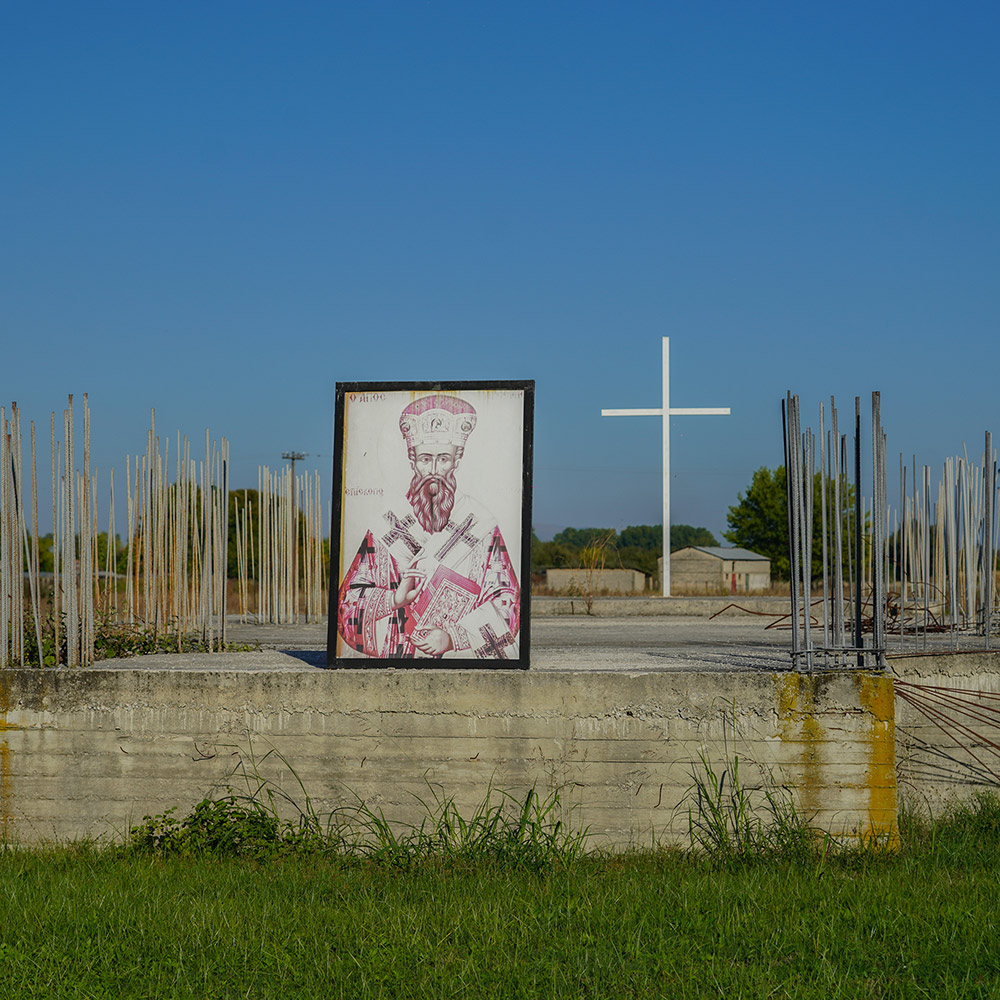
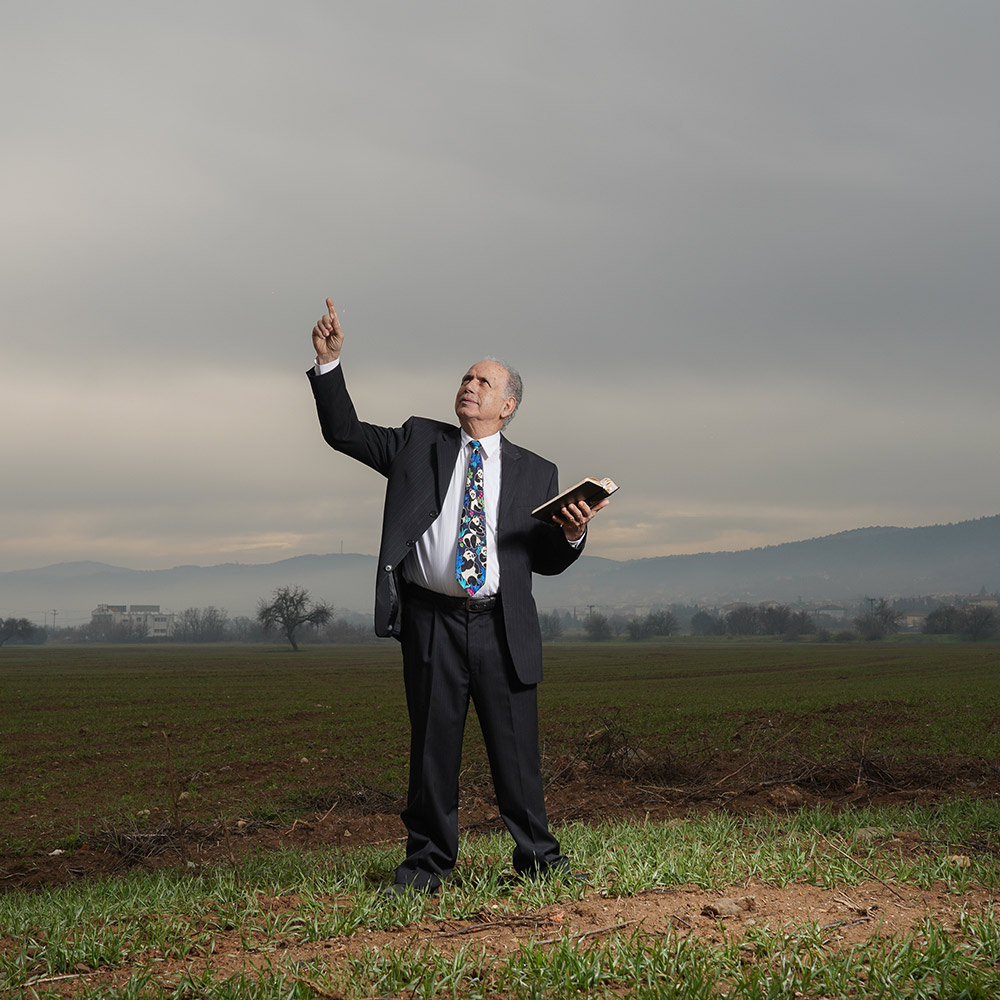
Greece is a small country with a rich History. It has a small population (ten million), and large land and sea borders. Its human geography consists mainly of Greeks, but also a percentage of immigrants and refugees. In Greece, although religious homogeneity prevails (90% of Greeks declare themselves Orthodox Christians), there is a plurality of religious communities based on the three monotheistic religions –Christianity, Judaism, Islam– which is of ethnographic and anthropological interest. All these people live in the same country and perform their religious duties, sometimes ignoring each other and sometimes living side by side. The link that binds them all together is Faith. In every religion there is a fundamental, recurring, multifaceted theme: the power of Faith to heal, to purify trauma, to honor the dead, to express the mystery and beauty of life. Over the centuries, religions have mirrored each other. They have borrowed gestures, hymns, customs and even saints from each other. There have always been many religions, and they have always divided people. But Faith is one. So is humanity. God is one and love is one. But to truly believe, the path is not only intellectual, it is even more internal and goes through the heart. For in order to truly love God and yourself, it is imperative that you love thy neighbor –even your enemy. This photographic work focuses on the universality of faith through love for your neighbor and acceptance of diversity. It consists mainly of portraits, landscapes and details of religious objects. The portraits form the connective tissue of the work and are taken in places of worship in Greece, in intimate interiors, but also in the wider urban environment. The Greek, the immigrant or the refugee are united by Faith, because the immateriality of Faith is illuminated, photographed and synthesized, where people, land and love “become one flesh”.